FMCG Consulting vs Food Consulting: What’s the Difference?
| Factor | FMCG Consulting | Food Consulting |
|---|---|---|
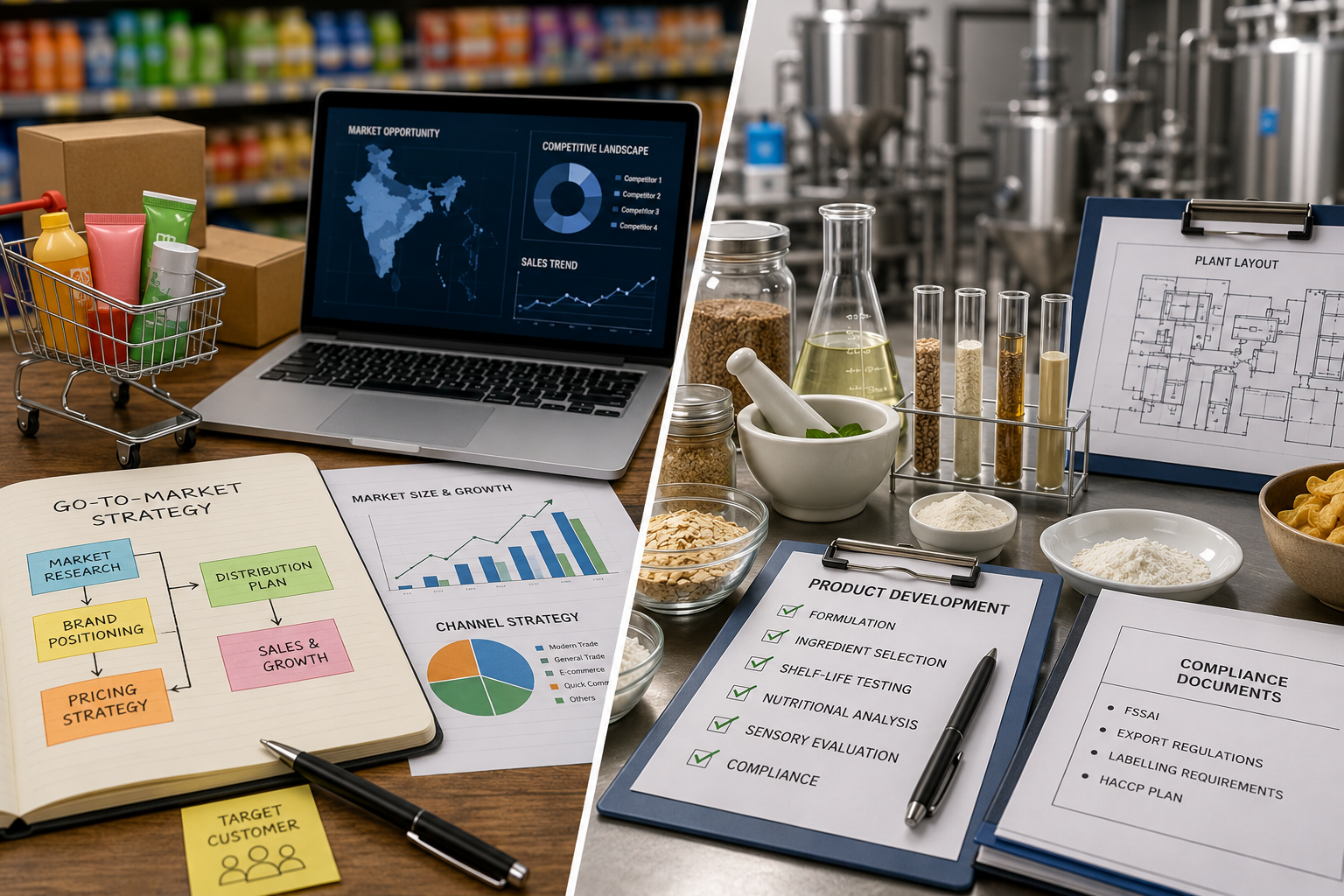
| Scope | Brand strategy, distribution, sales, pricing | Formulation, R&D, plant setup, compliance |
| Typical client need | Go-to-market and growth strategy | Product development and production readiness |
| Output | Market entry plans, channel strategy | Formulations, compliance documents, plant designs |
| When you need both | Launching a new product in a new market | Launching a new product in a new market |
The terms get used interchangeably often enough that it's worth being precise about what each one actually covers, because hiring the wrong type of consultant for the problem you actually have wastes both time and budget. The confusion isn't surprising either, since the two fields sit right next to each other in the same supply chain and frequently get bundled into one conversation by people pitching either service.
What Is FMCG Consulting?
FMCG consulting deals with the commercial side of getting a fast-moving consumer good to market and keeping it there. This includes brand positioning, distribution strategy, retail channel selection, pricing models, and competitive analysis. An FMCG consultant is typically brought in when a brand has a product but needs a clearer go-to-market plan, or when entering a new geography where local retail dynamics, pricing expectations, and distribution norms differ from the home market.
A lot of this work is less glamorous than it sounds. It's pricing spreadsheets, distributor negotiations, and figuring out which two or three retail formats actually matter for a specific category in a specific city.
What Is Food Consulting?
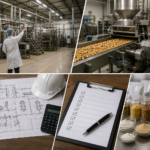
Food consulting, by contrast, deals with the product itself before it's commercially ready. This spans recipe formulation, ingredient sourcing, shelf-life testing, regulatory compliance, and in some cases food factory design and plant setup consultation. A food processing consultant or food manufacturing consultant is brought in when the question is whether the product can actually be made at scale, safely, legally, and within budget, independent of how it will eventually be sold.
Where FMCG consulting answers "will this sell," food consulting answers "can this even be made." Both questions matter, but they're answered by completely different people with completely different training.
Where Do FMCG Consulting And Food Consulting Overlap?
- Launching a new product in a new country
- Scaling from a regional brand to a national or international FMCG player
- Reformulating an existing product to chase a health trend
- Category expansion through acquisition
Why The Difference Between FMCG And Food Consulting Matters
Brands that don't separate these two get into trouble in a specific way: they hire an FMCG consultant to fix what's actually a formulation problem, or a food consultant to fix what's actually a distribution problem, and wonder why the engagement didn't move the needle. The fix usually isn't more consulting, it's the right type of consulting for the actual bottleneck.
Which One Does Your Brand Actually Need?
If your question is "will people buy this and how do we sell it," that's FMCG consulting territory. If your question is "can we actually produce this safely and legally, and does it taste right at scale," that's food consulting territory. Many growing brands need both at different stages, often sequentially: food consulting to get a product launch-ready, followed by FMCG consulting once there's enough traction to justify a serious distribution and growth strategy.