Information Khabar

Uncategorized

Uncategorized

What Does a Food Manufacturing Consultant Actually Do?

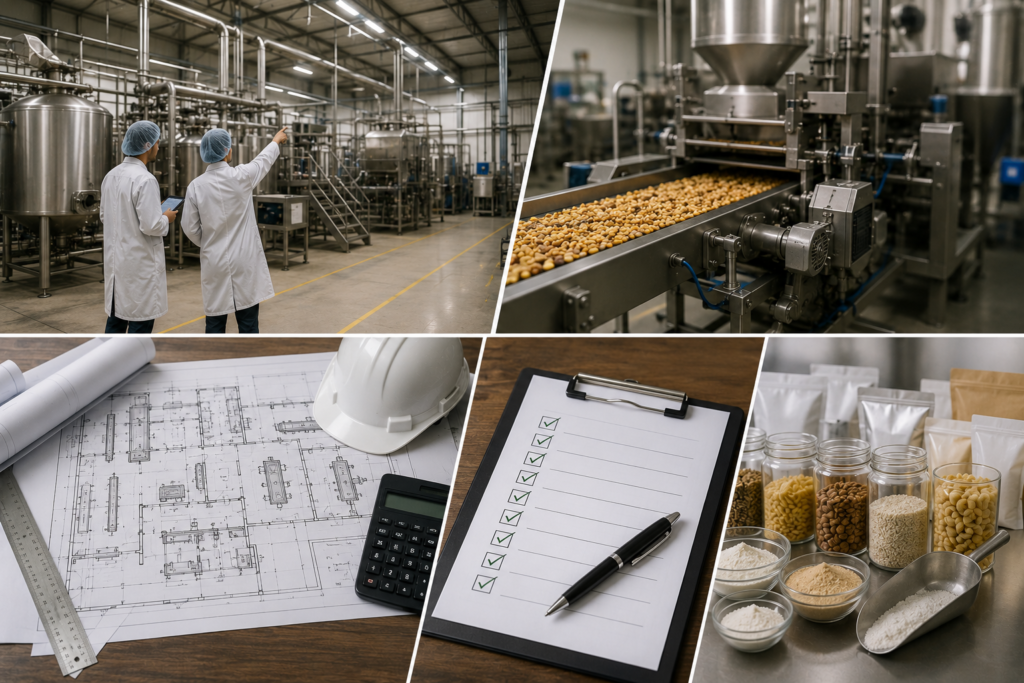
“Food manufacturing consultant” gets used as a catch-all term, which is part of the problem. Someone searching for help with a single piece of equipment and someone planning a full factory build from scratch both end up typing roughly the same search, even though the engagements they actually need look nothing alike. The Core Scope Of Food Manufacturing Consulting At its core, a food processing consultant helps bridge the gap between a product formulation and the physical, regulatory, and operational requirements of producing it at scale. This includes equipment selection, facility layout, production capacity planning, and ensuring the physical plant meets food safety certification requirements like HACCP and FSSAI facility standards. Food Factory Design And Setup Consultation This is the broader end of the work, and it usually covers site and layout planning to optimise workflow and minimise contamination risk, equipment specification matched to actual production volume rather than guesswork, utility planning for water, power, and waste management, and phased setup planning for businesses scaling production over time instead of building maximum capacity on day one. When Does A Business Need A Food Manufacturing Consultant? There are really two situations where this comes up. The first is a brand moving from a shared or contract manufacturing facility into its own plant for the first time, where almost every decision is being made from scratch. The second is an existing facility that needs to expand or modify its line to handle a new product category, where the constraint isn’t starting from zero, it’s working around equipment and infrastructure that’s already in place. Both situations involve decisions that are expensive to reverse once equipment is purchased and installed, which is exactly why getting the layout and equipment specification right matters more here than in almost any other part of running a food business. How Long Does A Food Factory Setup Consultation Take? This depends heavily on facility size, but initial layout and equipment planning often takes four to eight weeks. The full setup process, including procurement and installation, typically extends several months beyond that. Costs follow a similar pattern, ranging from a focused equipment and layout consultation for a small unit to a much larger engineering engagement for a full-scale facility, usually structured either as a fixed project fee for defined deliverables or a phased retainer for businesses building out a facility over several months. Frequently Asked Questions What’s the difference between a food manufacturing consultant and a food processing consultant? The terms are often used interchangeably. Where a distinction exists, manufacturing sometimes leans toward broader operational and plant-level work, while processing can refer more specifically to the technical handling of ingredients through production, though in practice the scope overlaps significantly. Do I need a consultant for a small production unit, or only for large factories? Smaller units benefit too, often for equipment selection and layout efficiency, even if the engagement is smaller in scope than a full factory design project. How long does a food factory setup consultation typically take? This depends heavily on facility size, but initial layout and equipment planning often takes four to eight weeks, with the full setup process, including procurement and installation, extending several months further. Does a food engineering consultant also handle FSSAI or HACCP certification? Many do, since facility design and certification requirements are closely linked — the physical plant needs to meet specific standards before certification can be granted. Can a consultant help with phased factory setup instead of building full capacity upfront? Yes, this is a common approach for growing brands, planning a facility layout that allows capacity to be added in stages as production volume grows, rather than over-investing in equipment before it’s needed.
Uncategorized

UK Food Labelling Requirements 2026: Address Rules, Allergens And Common Export Mistakes

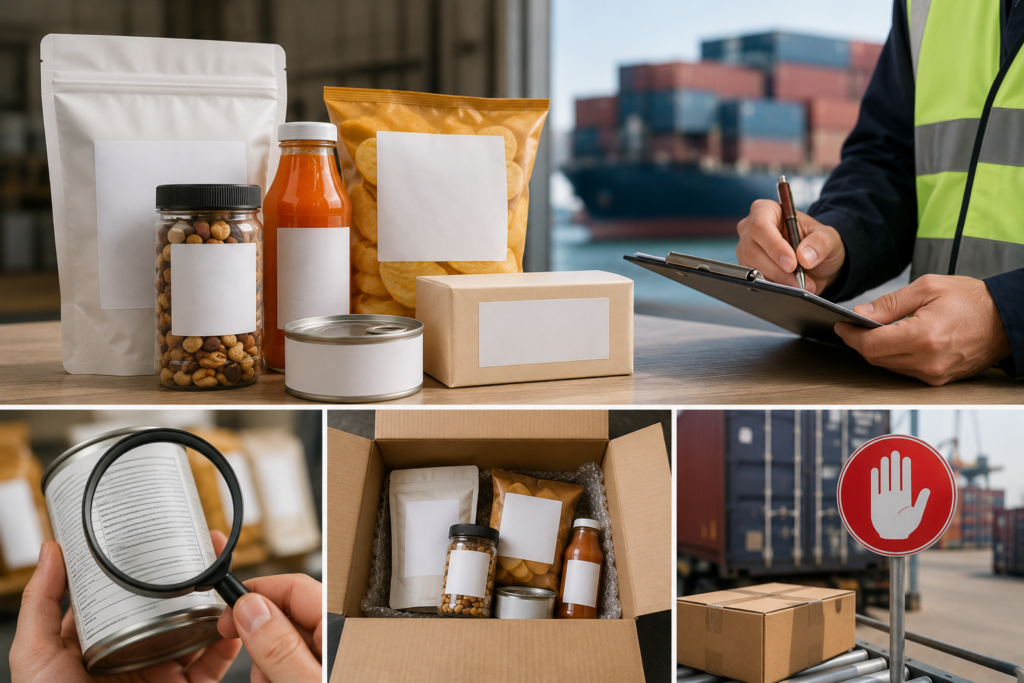
Most rejected shipments at UK ports don’t get stopped because of what’s in the product. They get stopped because of what’s missing on the label, an address, an allergen declaration, a unit of measurement in the wrong format. The product itself is usually fine. The label is what trips people up. What UK Food Labelling Actually Requires Any pre-packaged food sold in the UK has to carry a defined set of information under the Food Information Regulations: the name of the food, a full ingredients list in descending order of weight, allergen information, net quantity, a durability date, storage conditions where relevant, and the name and address of the food business operator or importer responsible for the product. All of it has to be in English and presented clearly enough to be easily read by consumers. The UK Address Requirement Exporters Often Miss Since Brexit, products sold in Great Britain need a UK address on the label, either the food business operator’s own UK address or the address of a UK-based importer. A label that only carries the exporter’s address back in India doesn’t meet this requirement, and it’s one of the more common reasons shipments get flagged on arrival. If you’re working through a UK importer or distributor, their address typically covers this requirement, but it has to actually be printed on the label, not just held on file somewhere. Allergen Labelling Rules The UK requires 14 major allergens to be clearly identifiable within the ingredients list, usually through bold, italic, or otherwise emphasised formatting, things like peanuts, tree nuts, milk, eggs, soya, gluten-containing cereals, and shellfish among others. Precautionary “may contain” statements are common but are meant to reflect a genuine cross-contamination risk, not used as a blanket liability shield across an entire product range. What’s Changing Under The New UK-EU Agreement? In March 2026, the UK government set out further details of a new Sanitary and Phytosanitary agreement with the EU, expected to take effect by mid-2027. The detail that matters most for labelling is that the UK intends to dynamically align with EU food law going forward, covering food information, nutrition and health claims, and marketing standards, not just for goods trading with the EU but potentially for the UK market as a whole. Detailed sector-specific guidance is due from DEFRA starting in May 2026, with fuller findings expected through summer 2026. For now, exporters should treat the current rules as the standard and keep an eye on future guidance, since some requirements could change over the next couple of years. Common Mistakes That Get Shipments Flagged Beyond the missing UK address, the most frequent issues are inconsistent allergen formatting between the ingredients list and any allergen summary box, net quantity declared in the wrong unit format, and durability dates that don’t match the format UK retailers expect. Most of these mistakes are fairly easy to correct. The problem is that many exporters simply reuse labels designed for another market and make only minor changes before shipping to the UK, which is where small compliance issues start showing up. Frequently Asked Questions Does a UK importer’s address satisfy the UK address labelling requirement? Yes, as long as the importer’s UK address is actually printed on the label itself, not just held in commercial documentation or correspondence. How many allergens does the UK require to be declared? 14 major allergens must be clearly identifiable within the ingredients list, typically through bold, italic, or other emphasised formatting that sets them apart from the rest of the ingredient text. Will the new UK-EU SPS agreement change food labelling requirements? It’s expected to, since the UK has signalled an intention to dynamically align with EU food law including food information and labelling rules, though the agreement isn’t due to take effect until mid-2027 and detailed guidance is still being developed. Can a label designed for the Indian market be adapted for UK export? It can, but it usually needs more than a sticker translation — the UK address requirement, allergen formatting, and net quantity format typically all need specific adjustments rather than a direct swap. What happens if a label is missing required UK information? Shipments can be held or rejected at the port, and persistent labelling issues can affect a business’s standing with UK importers and retailers who don’t want repeated compliance delays.

Uncategorized

How Quick Commerce Is Reshaping Food Brand Distribution In India

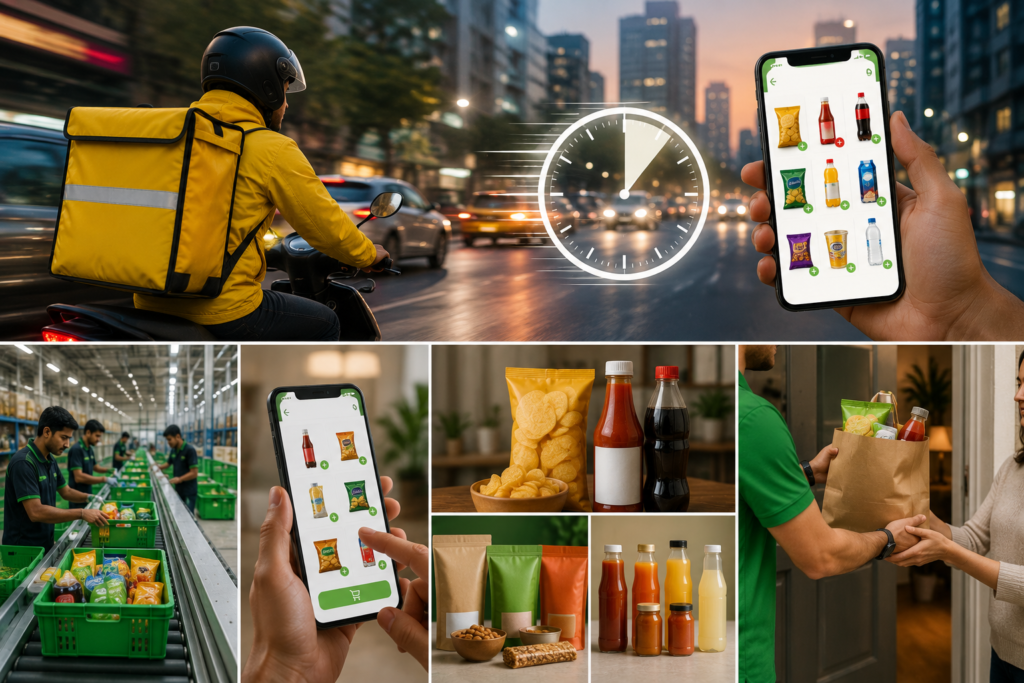
Ten minutes. That’s roughly how long it now takes for a packet of chips or a bottle of ketchup to reach someone’s door in a major Indian city, and that single number has quietly rewritten how food brands think about distribution. How Fast Quick Commerce Has Grown Quick commerce has gone from a curiosity to a serious distribution channel in a short space of time. It now accounts for 70 to 75 percent of total e-grocery orders in India, up from around 35 percent just a few years ago, and has delivered some FMCG companies a 50 to 100 percent sales increase in specific categories. Even now, quick commerce is believed to be tapping only a small fraction of its potential market, which explains why brands continue investing heavily in the channel despite slower growth elsewhere. Why This Matters For Food Brands Specifically Food and beverage products behave differently in quick commerce than in traditional retail. Pack sizes that work for a weekly grocery run don’t always work for an impulse ten-minute order. Shelf placement logic shifts when there’s no physical shelf, just an app interface deciding what shows up first. Brands that built their distribution strategy entirely around general trade and modern retail are having to rethink packaging, pricing, and even portion sizes for a channel that didn’t really exist five years ago in its current form. The Categories Seeing The Biggest Shift Snacking and beverages have been particularly responsive to this channel. Snacking demand grew at close to 6 percent in late 2025, and soft drinks saw growth closer to 19 percent in the same period, categories that lend themselves naturally to impulse, small-basket ordering rather than planned bulk purchases. What This Means For Smaller Brands Quick commerce platforms have, in some ways, levelled the playing field for smaller and regional food brands that struggled to get shelf space in large modern retail chains. Listing on a quick commerce app doesn’t require the same negotiating leverage as securing prime shelf space at a supermarket. That said, visibility within the app is its own competitive game, and brands without a deliberate strategy for it tend to get buried under bigger competitors with bigger ad budgets on the platform itself. Frequently Asked Questions How big is quick commerce in India’s FMCG sector right now? Quick commerce now accounts for 70 to 75 percent of total e-grocery orders in India, up from around 35 percent a few years ago, while still covering only a small share of its total estimated addressable market. Which food categories are growing fastest through quick commerce? Snacking and beverages have shown particularly strong growth through this channel, both categories that suit impulse, small-basket ordering more naturally than planned bulk grocery shopping. Do food brands need different packaging for quick commerce? Often yes — pack sizes and formats designed for weekly grocery shopping don’t always translate well to smaller, more frequent quick commerce orders, which has pushed some brands to introduce smaller pack formats specifically for this channel. Is quick commerce a viable channel for smaller or regional food brands? It can be, since it doesn’t require the same shelf-space negotiating leverage as large modern retail chains, though visibility within the app itself becomes a separate competitive challenge. How much more room does quick commerce have to grow in India? Industry estimates suggest the channel is currently operating at only around 7 percent of its potential market, indicating significant room for continued growth.

Uncategorized

FSSAI’s 2026 Licensing Overhaul: New Turnover Thresholds and Perpetual Licenses Explained

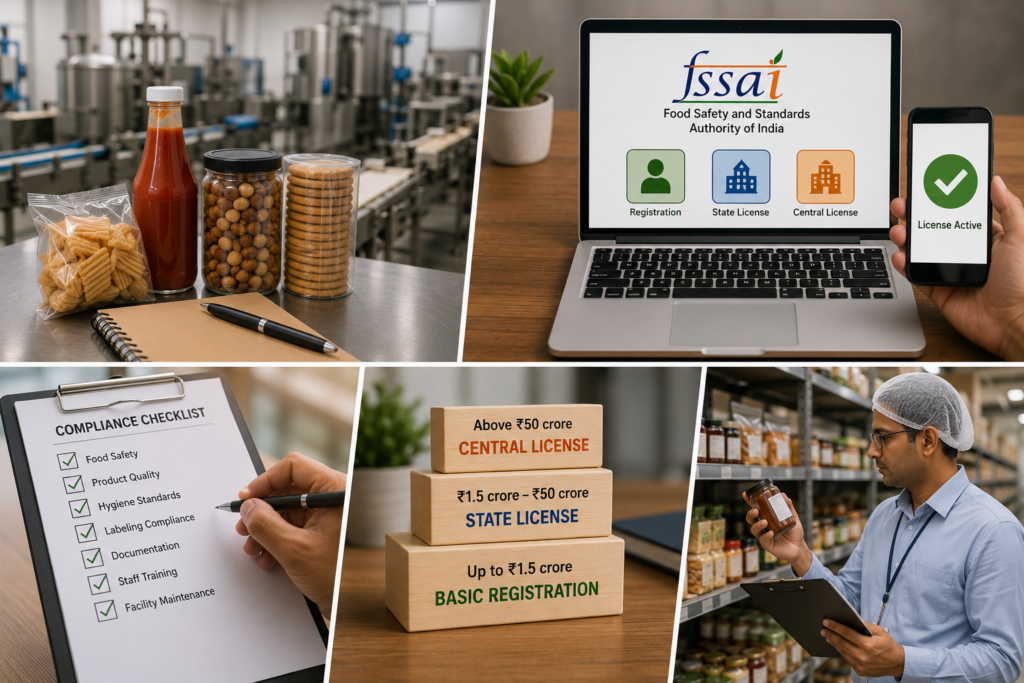
₹12 lakh to ₹1.5 crore. That’s not a typo, and it’s the single number that just changed which FSSAI category a huge share of India’s food businesses now fall into. FSSAI notified a major overhaul to its licensing and registration regulations in March 2026, and a separate order revised the turnover thresholds effective April 1, 2026. Together, these changes are the biggest shift to FSSAI licensing since the system moved online. What Actually Changed Three tiers still exist, Registration, State License, and Central License, but the lines between them moved significantly. Basic Registration now covers turnover up to ₹1.5 crore, replacing the old ₹12 lakh limit. State License applies between ₹1.5 crore and ₹50 crore. Central License kicks in above ₹50 crore. For a huge number of small and mid-sized food businesses that were previously required to hold a State License simply because they crossed ₹12 lakh in turnover, this means they may now only need Basic Registration, a considerably lighter compliance tier. Licenses No Longer Expire Any license or registration issued on or after April 1, 2026 now has perpetual validity. There’s no renewal cycle to track anymore, the license stays active until it’s suspended or cancelled. The trade-off is that if the annual fee or required return isn’t filed on time, the license gets automatically suspended, so the compliance burden has shifted from “remember to renew” to “don’t miss your annual filing.” Which Businesses Still Need A Central License? Turnover isn’t the only factor. A specific list of business categories must hold a Central License regardless of how small their turnover is: importers, e-commerce food platforms, nutraceutical and health supplement manufacturers, proprietary food makers, exporter-manufacturers, trader and merchant exporters, 100% export-oriented units, radiation processing facilities, and 5-star-and-above hotels, among others. A small nutraceutical brand with modest revenue can’t simply default to Basic Registration just because its turnover qualifies. Inspections Are Becoming Risk-Based Rather than a fixed inspection calendar, FSSAI has moved toward a risk-based inspection framework, where inspection frequency depends on the nature of the business and its compliance history rather than a blanket schedule applied to everyone equally. What Existing Food Businesses Need To Check If your business was already operating under a State License because of the old ₹12 lakh threshold, it’s worth checking whether your current turnover now qualifies you for Basic Registration instead. Migration to the new threshold category is being handled as free and automatic through FoSCoS, and it doesn’t change your existing license number. Worth confirming directly on the FoSCoS portal rather than assuming, since the categories you fall under depend on both turnover and the specific nature of your business. Frequently Asked Questions What is the new FSSAI Basic Registration turnover limit in 2026? Basic Registration now applies to food businesses with annual turnover up to ₹1.5 crore, up from the earlier ₹12 lakh limit, effective for applications from April 1, 2026. Do FSSAI licenses still need to be renewed? Licenses and registrations issued on or after April 1, 2026 have perpetual validity and don’t need renewal, though they can be automatically suspended if annual fees or returns aren’t filed on time. Which businesses must get a Central License regardless of turnover? Importers, e-commerce food platforms, nutraceutical and health supplement manufacturers, exporter-manufacturers, trader and merchant exporters, 100% export-oriented units, and 5-star-and-above hotels are among the categories that require a Central License regardless of turnover. Do I need to reapply if I already have an FSSAI license under the old thresholds? No, migration to the new threshold category is handled as a free, automatic process through FoSCoS and doesn’t change your existing license number, though it’s worth confirming your current category on the portal. How does the new risk-based inspection system work? Instead of a fixed inspection calendar applied uniformly, inspection frequency is now tied to the nature of the business and its compliance history, meaning businesses with stronger compliance records may face fewer routine inspections.

Scroll to Top