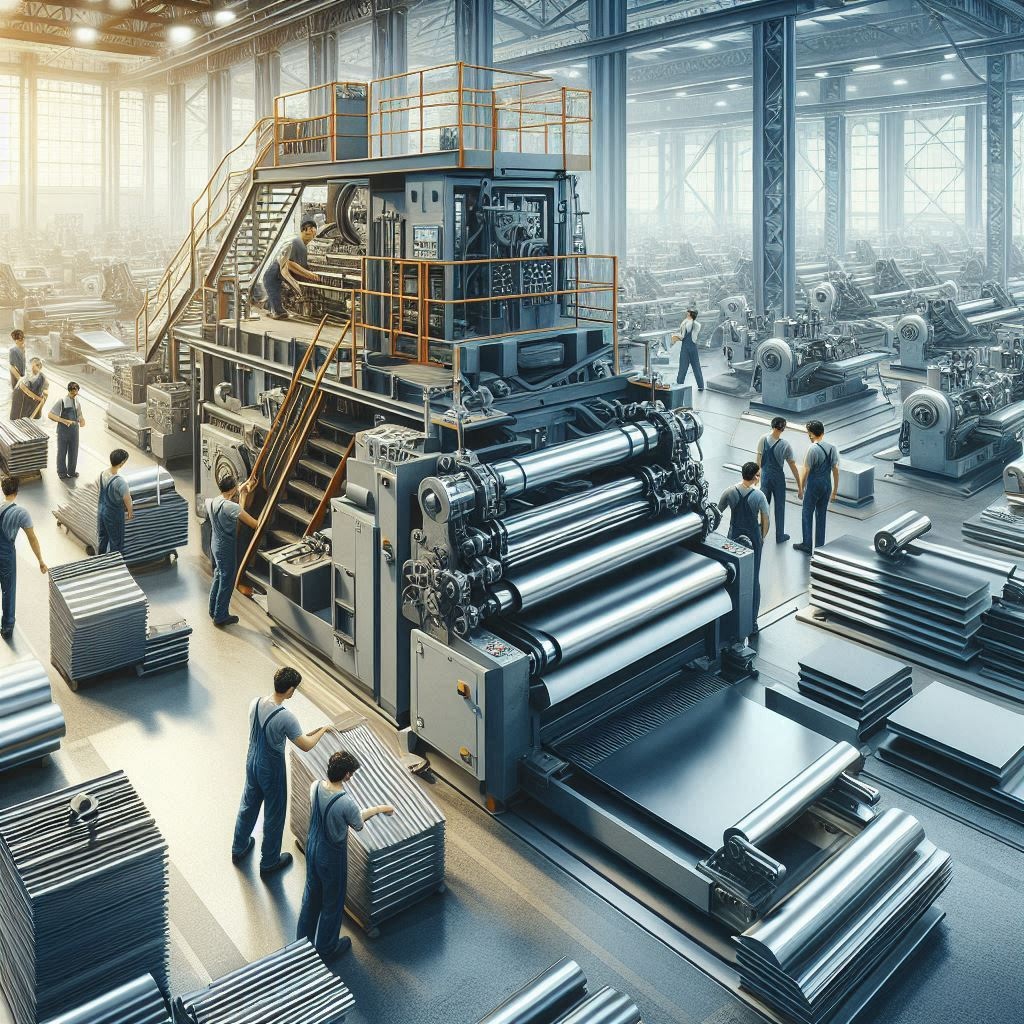
What Sets Leading Automatic Plate Rolling Machine Manufacturers Apart?
In heavy fabrication and metal forming industries, plate rolling is not a supporting activity. Plate rolling defines dimensional accuracy, structural integrity, welding fit-up quality, and final product reliability. When tolerances tighten and production volumes rise, the difference between an average supplier and an industry leader becomes painfully visible on the shop floor. The gap is not marketing-driven. The gap is built into design decisions, control philosophy, material selection, and long-term performance behavior. That gap is exactly where leading automatic plate rolling machine manufacturers operate.
The following analysis breaks down the real factors that separate top-tier manufacturers from commodity-level suppliers—factors proven on production lines, not in brochures.
Structural Engineering That Respects Physics
Every high-performing plate rolling machine starts with mass, rigidity, and load distribution. Serious manufacturers design frames around real bending forces, not catalog numbers. Stress paths are calculated for maximum plate thickness, full working width, and continuous-duty operation. Frame geometry is optimized to prevent torsional deflection under asymmetric loads, especially during cone rolling and pre-bending cycles.
High-end machines use normalized or stress-relieved steel structures, precision-machined after welding, not before. Roll housings are aligned post-assembly to eliminate cumulative error. Bearing blocks are oversized intentionally to maintain alignment over years of thermal cycling and shock loading. These engineering choices are expensive, invisible to casual buyers, and impossible to fake later.
This is one of the earliest points where automatic plate rolling machine manufacturers separate into two categories: those who calculate load behavior and those who guess.
Roller Technology Built for Consistency, Not Demonstration
Rollers define bending accuracy more than any other component. Leading manufacturers specify forged alloy steel rolls with controlled hardness gradients—hard enough to resist surface wear, soft enough at the core to absorb shock without cracking. Roll crowning is engineered based on real deflection models, not generic formulas.
Drive rolls are ground and balanced to tight tolerances to avoid vibration at low-speed high-torque operation. Side rolls and upper rolls maintain parallelism through synchronized hydraulic control, preventing plate skewing during multi-pass rolling.
Machines from top automatic plate rolling machine manufacturers maintain curvature consistency across the full plate width, even on thick materials, without operator correction loops. That capability does not come from software tricks. That capability comes from roller geometry and structural discipline.
Control Systems Designed Around the Operator, Not the Programmer
Automation is meaningless without usability. Leading manufacturers design control systems that reflect real shop-floor behavior. CNC interfaces are built around bending logic, not generic motion control menus. Plate thickness, material grade, target diameter, and rolling sequence are entered once. The system calculates roll positioning, pre-bend offsets, and compensation values automatically.
Feedback loops from encoders and pressure sensors correct deviations in real time. Hydraulic response curves are tuned to avoid overcorrection, which destroys repeatability. Memory functions store proven programs, allowing identical results across shifts without reliance on individual skill.
This is where advanced automatic plate rolling machine manufacturers outperform others: control systems behave predictably under load, not just during demonstrations.
Hydraulic Systems That Prioritize Stability Over Speed
Fast movement impresses buyers. Stable pressure delivery impresses production managers. Leading manufacturers design hydraulic circuits for constant pressure, low thermal drift, and smooth proportional control. Pumps, valves, and accumulators are selected for continuous operation, not intermittent cycles.
Cylinder sizing is conservative, reducing internal stress and seal wear. Filtration standards exceed basic requirements, extending oil life and maintaining servo accuracy. Temperature control is integrated into system design rather than added later as a patch.
Machines from serious automatic plate rolling machine manufacturers deliver identical roll positioning at the first cycle and the thousandth cycle. That consistency defines production reliability.
Material Handling Integration That Reduces Hidden Costs
Rolling accuracy collapses when material handling is ignored. Top manufacturers design machines as part of a material flow system. Hydraulic plate supports, synchronized feeding tables, side supports, and overhead alignment devices are engineered together with the rolling unit.
This integration prevents plate sagging, edge collapse, and uncontrolled rotation during rolling. Reduced manual handling improves safety and eliminates geometry distortion before rolling even begins.
Manufacturers who understand production economics treat handling as a core function, not an accessory. That mindset consistently appears among leading automatic plate rolling machine manufacturers.
Capability Across Real-World Applications
Industrial plate rolling rarely involves perfect material. Plates arrive with residual stress, camber, surface scale, and thickness variation. High-end machines are built to handle such realities without sacrificing output quality.
Advanced machines support:
- Thick plate rolling without excessive passes
- Accurate cone rolling with controlled taper angles
- High-strength steel forming without surface damage
- Repeatable pre-bending with minimal flat ends
These capabilities come from coordinated mechanical design, control logic, and hydraulic response—not from optional features. Proven automatic plate rolling machine manufacturers deliver machines that perform under imperfect conditions, not ideal ones.
Service Infrastructure That Matches Machine Complexity
Advanced machines require advanced support. Leading manufacturers maintain structured service ecosystems: trained field engineers, remote diagnostics, stocked spare components, and long-term parts availability.
Documentation is machine-specific, not generic. Electrical schematics, hydraulic diagrams, and maintenance schedules reflect actual configurations delivered. Training focuses on production stability, not just operation.
Support quality often determines total cost of ownership. Manufacturers who invest in long-term service retain industrial clients for decades. This behavior consistently defines top automatic plate rolling machine manufacturers.
Manufacturing Discipline Inside the Factory
Inspection discipline inside the manufacturing facility directly impacts machine life. Leading manufacturers control machining tolerances on large components using calibrated equipment. Assembly follows documented sequences to prevent preload errors. Hydraulic lines are flushed and tested before final commissioning, not after shipment.
Factory acceptance tests involve real material, full-load cycles, and dimensional verification. Machines leave the factory already proven, not just powered on.
This internal discipline explains why machines from established automatic plate rolling machine manufacturers maintain accuracy long after installation.
Long-Term Value Over Short-Term Pricing
Purchase price attracts attention. Lifetime performance determines value. Leading manufacturers design machines intended for decades of operation, upgrade compatibility, and evolving production demands.
Electrical systems allow control upgrades without structural modification. Mechanical designs accept future capacity enhancements. Software evolves without forcing hardware replacement.
This long-view approach defines strategic manufacturing partners rather than transactional suppliers. That distinction consistently appears among respected automatic plate rolling machine manufacturers.
Market Reputation Built on Performance, Not Promotion
Reputation in heavy industry spreads through performance results, not advertising. Fabricators, EPC contractors, shipyards, and pressure vessel manufacturers rely on machines that deliver under deadline pressure.
Repeat orders, cross-plant standardization, and long-term relationships signal trust earned through performance. That trust consistently surrounds the same group of automatic plate rolling machine manufacturers across global markets.
Final Perspective
The difference between average and exceptional plate rolling equipment is not cosmetic, digital, or superficial. The difference is structural integrity, hydraulic stability, control intelligence, and manufacturing discipline applied consistently across every machine delivered.
Leading automatic plate rolling machine manufacturers build equipment that respects physics, production reality, and long-term ownership costs. That approach produces machines that hold tolerance, protect material, reduce downtime, and sustain output year after year.
In industries where metal does not forgive mistakes, only manufacturers who engineer without shortcuts remain relevant.