
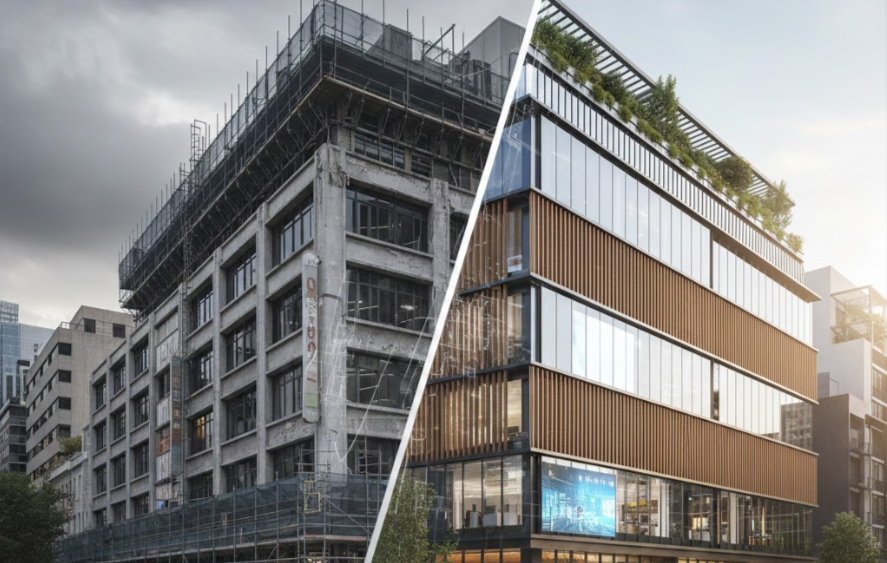
The Art of Repositioning: Strategies for Adding Significant Value to Your Existing Commercial Asset
Commercial property repositioning is the strategic process of revitalising an underperforming asset through physical, functional, or financial means to significantly lift its market value, tenant appeal, and long-term yield. This proactive approach is essential for investors looking to thrive in dynamic markets like Sydney and Greater NSW, transforming stagnant holdings into high-performing, competitive assets that generate superior returns.
What is Commercial Asset Repositioning?
Commercial asset repositioning involves fundamentally changing the features and function of an existing commercial building to align it with current market demands and prospective tenant needs. The core purpose is to elevate the property from its current state—often suffering from obsolescence, poor tenancy mix, or outdated design—to a state where it can command a higher rental rate and a premium capital valuation. Repositioning isn’t just a cosmetic renovation; it’s a structural and strategic overhaul.
A building’s situational relevance determines the best repositioning path. For instance, a derelict industrial warehouse near a major infrastructure project is highly relevant for a functional repurpose, while an ageing office block in the CBD is ripe for physical refurbishment to meet modern environmental standards.
Why Reposition Now? The Australian Market Context
The real estate of commercial property landscape is characterised by stark contrasts: industrial property is booming, while certain segments of the office and retail markets face headwinds. This disparity makes repositioning a necessity, not a luxury. Specific market conditions affirm the value of this strategy:
-
Office Vacancy Rates: Several key Australian CBDs are recording office vacancy rates above 15%, compelling owners to invest in premium amenities to compete for high-quality tenants.
-
Industrial Rent Increases: Industrial rents in Sydney have surged by over 25% in the last two years, creating massive incentives to convert older, low-clearance warehouses into high-clearance, automated logistics hubs.
-
Cap Rate Compression: As core assets become more expensive, investors are chasing value-add opportunities where they can manufacture capital growth, often targeting a repositioning project that promises a minimum 20% uplift in value within a three-year timeframe.
The Three Pillars of Value-Add Repositioning
Successful repositioning focuses on one or more of three distinct strategic pillars. Understanding the pros and cons of each helps define the right approach for your property and your target audience—be they high-net-worth investors, institutional funds, or owner-occupiers.
| Strategy Pillar | Key Function / Goal | Effort & Risk Profile | Target Audience (Post-Repositioning) |
| Physical Refurbishment | Modernising the asset’s look and function to meet modern tenant expectations. | Low to Medium effort, High certainty of return. | A-grade office tenants, high-end retail brands, professional service firms. |
| Functional Repurposing | Changing the building’s use case through re-zoning or structural modification. | High effort, Medium to High regulatory risk. | Medical operators, education providers, mixed-use developers. |
| Financial Restructuring | Optimising the capital stack, tenancy agreements, or lease terms to improve Net Operating Income (NOI). | Low effort, High strategic value, requires financial expertise. | Institutional investors, funds valuing stable, predictable income streams. |
Strategy Deep Dive 1: Physical & Aesthetic Upgrades
Physical refurbishment focuses on the tangible aspects of the building, making it more efficient, appealing, and compliant. The key attribute here is premiumisation: moving an asset from a ‘C-Grade’ or ‘B-Grade’ classification up the value chain.
To perform this, the first step is to conduct a detailed audit to identify inefficiencies. Five major areas for physical value-add include:
-
Façade & Street Presence: A modern, refreshed entrance and exterior immediately improves a property’s perceived value. This includes adding contemporary materials like glass, steel, and integrated digital signage.
-
End-of-Trip (EOT) Facilities: Modern Australian tenants prioritise health and sustainable transport. Installing superior EOT amenities—such as secure bike storage, lockers, and high-quality showers—is a non-negotiable feature for attracting top-tier office tenants.
-
Building Services Upgrades: Replacing old Heating, Ventilation, and Air Conditioning (HVAC) systems and improving lifts not only reduces operational costs but significantly improves the building’s NABERS energy rating, which directly correlates with a higher valuation.
-
Common Area Activation: Transforming underutilised lobbies and rooftops into shared, collaborative spaces adds amenity. Examples include creating tenant lounges, shared meeting hubs, and rooftop entertaining terraces.
-
Digital Integration: Installing smart building management systems and high-speed fibre optic connectivity provides a clear functional advantage over legacy buildings.
The functional outcome of these upgrades is a higher per-square-metre rental rate and a lower risk profile, as tenants are typically secured on longer lease terms.
Strategy Deep Dive 2: Functional Repurposing
Functional repurposing, or adaptive reuse, involves changing the building’s designated use case entirely. This is particularly relevant for obsolete assets, such as dated inner-city retail spaces or vacant B-Grade offices, where demand has shifted away from the original intent.
To execute this, owners must secure council approval for re-zoning or a Material Change of Use. Situational relevance drives this decision; the property must sit in a location where the new proposed function is highly in demand.
Compelling Use Cases for Repurposing include:
-
Office to Medical/Health Hub: In areas with high residential density but limited local healthcare infrastructure, converting vacant office floors into specialist medical suites, day surgeries, or pathology labs provides a recession-proof income stream.
-
Industrial to Creative/Hybrid: Converting older, low-clearance industrial units in gentrifying suburbs into flexible creative hubs, small-scale distilleries, or urban logistics depots leverages the location’s inherent appeal and proximity to labour.
-
Retail to Educational/Childcare: Given Australia’s persistent demand for childcare and vocational education, repurposing large format retail boxes into approved educational facilities offers exceptionally strong tenancy covenants.
This is where the benefit of engaging a specialist property service firm is evident. A group with deep market intelligence, such as ReVest Property Group, is often engaged to manage the complex re-zoning application process and secure pre-commitments from the new target tenants before the refurbishment is completed, mitigating vacancy risk.
visit: https://www.revestpg.com.au/
Key Attributes of Successful Repositioning
Successful value-add repositioning relies on specific, quantifiable attributes, driven by factual and strategic thinking, not guesswork.
Prioritising Long-Term Yield Over Short-Term Cost
The key attribute for any repositioning project is the projected Internal Rate of Return (IRR). Savvy investors do not focus solely on the initial cost, but on the potential for a magnified increase in value. For instance, spending $1.5 million on a full lobby and EOT upgrade may seem substantial, but if it increases the average rental rate from $450/sqm to $550/sqm and secures a five-year WALE (Weighted Average Lease Expiry), the investment is highly justified.
Target Audience & Tenant Focus
Understanding the target audience is paramount. Repositioning must be tenant-led. Instead of vague aspirations, focus on specific tenants and their distinct requirements.
-
For Industrial: The target is logistics providers, focused on clear-span heights (aim for 10m+), truck manoeuvrability, and minimal office-to-warehouse ratio.
-
For Commercial Office: The target is institutional-grade tenants who demand wellness-focused features, such as natural light, fresh air flow systems, and integrated greenery.
Due Diligence and Certainty
Due diligence asserts certainty in the project’s outcome. Before any work commences, a comprehensive feasibility study is completed. This study determines the 5 major risks that are non-negotiable for project success:
-
Planning and Regulatory Risk: The certainty of obtaining necessary council approvals (e.g., Development Application).
-
Construction Cost Inflation: The specific risk of cost overruns, often mitigated by firm fixed-price contracts.
-
Leasing Risk: The certainty of securing a tenant at the target rental rate within the anticipated void period.
-
Environmental/Contamination Risk: Especially critical for older industrial or manufacturing sites.
-
Debt Financing Certainty: Confirmation of funding for the capital expenditure.
ReVest Property Group’s Strategic Insight
At ReVest Property Group, the process of commercial asset repositioning is managed through an intelligence-led approach that minimises risk while maximising manufactured capital growth for our clients. We understand that in the current market, simply managing an asset is not enough; investors require a partner who can uncover, shape, and deliver new potential through strategic repositioning. This ensures every square metre of property delivers maximum value.
The Repositioning Strategy Comparison
This table summarises the core pros and cons of the three pillars, allowing investors to quickly assess the best strategy relative to their capital outlay and appetite for complexity.
| Repositioning Strategy | Pros | Cons | Value Uplift Potential | Typical Timeframe |
| Aesthetic Refurbishment | Quickest to execute, highest tenant retention rate, lowest regulatory hurdle. | Value uplift capped by existing building structure, does not address functional obsolescence. | 10% to 25% | 6–12 months |
| Functional Repurposing | Highest potential value uplift, targets under-supplied niche markets (e.g., medical). | Highest regulatory and planning risk, longest lead time, significant upfront capital outlay. | 25% to 60% | 18–36 months |
| Financial/Leasing Restructuring | Minimal capital expenditure required, immediate positive impact on Net Operating Income (NOI) and cap rate. | No physical improvement, value is entirely dependent on tenant covenant strength and lease terms. | 5% to 15% (on valuation) | 3–6 months |
Conclusion: Mastering the Art of Value Creation
The “art” in commercial property repositioning is not simply the renovation; it is the strategic foresight to identify an asset’s hidden potential and the technical skill to execute the transformation with certainty and precision. For owners of existing commercial assets in the Australian market, the time to assess and implement a repositioning strategy is now. The current market dynamics offer compelling situational relevance to transition assets into higher-yielding, modern forms. By employing tactics like strategic refurbishment, functional repurposing, and financial optimisation—all backed by rigorous due diligence and market-specific data—investors move beyond passive ownership to become active creators of wealth. This strategic approach ensures your asset not only competes today but is positioned to stand the test of time, delivering superior, enduring returns.