
Solving Storage Density Challenges with Automated Pallet Racking Systems
In the present day, warehouses are under constant stress to accommodate more products in their restricted areas without disrupting their operations and the quick processing of orders. The soaring volume of inventories, greater variety of products, and shorter delivery periods are pointing out the necessity of having efficient storage design in logistics facilities as the main concern of the modern world.
To meet these requirements, a large number of companies are turning to an automated pallet racking system that will allow them to utilise vertical space, streamline the flow of materials, and accommodate future growth in operations, all without having to increase their land size.
Understanding Storage Density Challenges
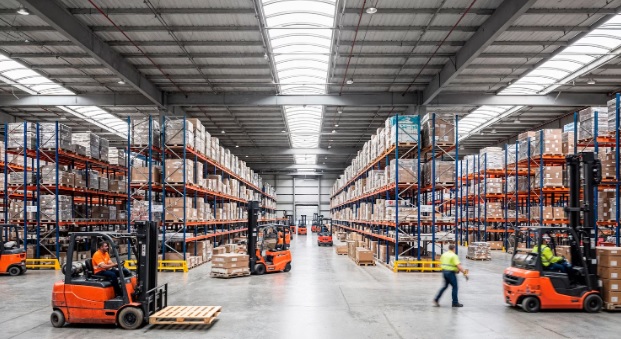
Storage density issues frequently occur when conventional racking designs do not take full advantage of vertical space. The majority of warehouses are equipped with static shelving and rely on manual handling of pallets, which, on the one hand, limits the height of stacking and, on the other hand, restricts access to storage lanes that are deeper.
When the amount of inventory increases, the problems of overcrowded aisles, inefficient picking routes, and poor accessibility of pallets become very common. These problems together slow down the work, take more time for handling, and make it more likely that the products will be damaged.
One more prevalent challenge is the demand for space efficiency versus safety. High stacks of pallets, narrow aisles, and manual lifting can create dangerous situations in a workplace. Warehouses that lack an effective storage strategy are unable to keep both requirements of capacity and compliance.
Benefits of an Automated Pallet Racking System
An automated pallet racking system allows warehouses to make use of vertical storage to an extent that proper and safe access is still enabled. The implementation of mechanised shuttles or automated retrieval units provides the possibility of fast movement of pallets across the storage lanes with high density.
This system is advantageous in terms of space usage as it eliminates the necessity for wide aisles and manual handling zones. Hence, the number of pallets that can be stored in the same floor area is increased with the same level of accessibility.
Automation undoubtedly enhances the speed of operations. The retrievals of pallets are quicker, thus making waiting times for loading and unloading shorter. This practice supports warehouses in keeping up with the demand even during peak periods.
Besides, automated racking leads to less dependence on forklifts, which in turn decreases the chances of accidents and damage to products. With less manual handling, not only does the safety of the workers increase, but also the efficiency of the storage area.
Planning a Warehouse Storage Solution
A warehouse storage solution that has been properly planned will look first at product dimensions, turnover rates, and pallet flow patterns. Knowing these factors demarcates the racking layout and thus the area where the most efficient high-density storage can be located.
Fast-moving products can be on racks with easy accessibility, whereas slow-moving ones can be stored in the back. This kind of placement saves time and makes picking more efficient.
The latest racking systems provide the possibility of modular expansion as well. If the stock increases, more lanes or shuttle units can be added without any disturbance to the continuing operations. This feature enables the warehouses to increase the storage capacity gradually.
Proper design ensures that an increased storage density should not affect the workflow management system or safety.
Implementation Considerations
Warehouses have to determine the durability of the floor, the height of the ceiling, and the availability of power before they will put in an automated pallet racking system. These elements indicate the safe limit of vertical storage that can be supported.
Another important factor is system integration. The compatibility of automated racking with warehouse management software has to be perfect so that there is automatic inventory tracking and uninterrupted movement of pallets.
Staff training is on the same level of importance as well. It is essential for the operators to be knowledgeable of the system controls, the safety protocols, and the basic troubleshooting procedures so that they can keep the performance at a constant level.
In the end, future scalability must be included in the implementation plan. The selection of flexible systems enables the warehouses to expand the storage space with no expensive redesigns.
Addverb and Intelligent Pallet Automation
Addverb is at the forefront of technology development for automated pallet systems that are intended to enhance the storage and flow of materials in contemporary warehouses. The company provides advanced technology, which consists of combining the automation hardware with the software of high intelligence for perfect operation.
The company’s approach emphasises high-density storage, efficient pallet movement, and smooth system integration to support long-term warehouse scalability.
How Addverb Supports Scalable Storage
The 4-way pallet shuttle system from Addverb can move pallets within the dense racking structures in all directions. This flexibility makes it possible to have faster storage and retrieval as well as complete utilisation of both vertical and horizontal spaces.
The system is compatible with warehouse management systems and offers real-time inventory visibility, thereby assisting with accurate stock control.
By reducing manual handling and forklift usage, Addverb’s warehouse storage solution helps make operations safer and more consistent.
Conclusion
Overcoming storage density difficulties demands a comprehensive approach rather than just the installation of additional racks. Warehouses have to look for intelligent layout, automation, and scalable systems that would increase space utilisation without interfering with the daily operations.
By implementing Addverb’s smart pallet automation solutions, it is possible for warehouses to have a very high storage density, along with other factors like efficiency, accuracy, and long-term operational stability.