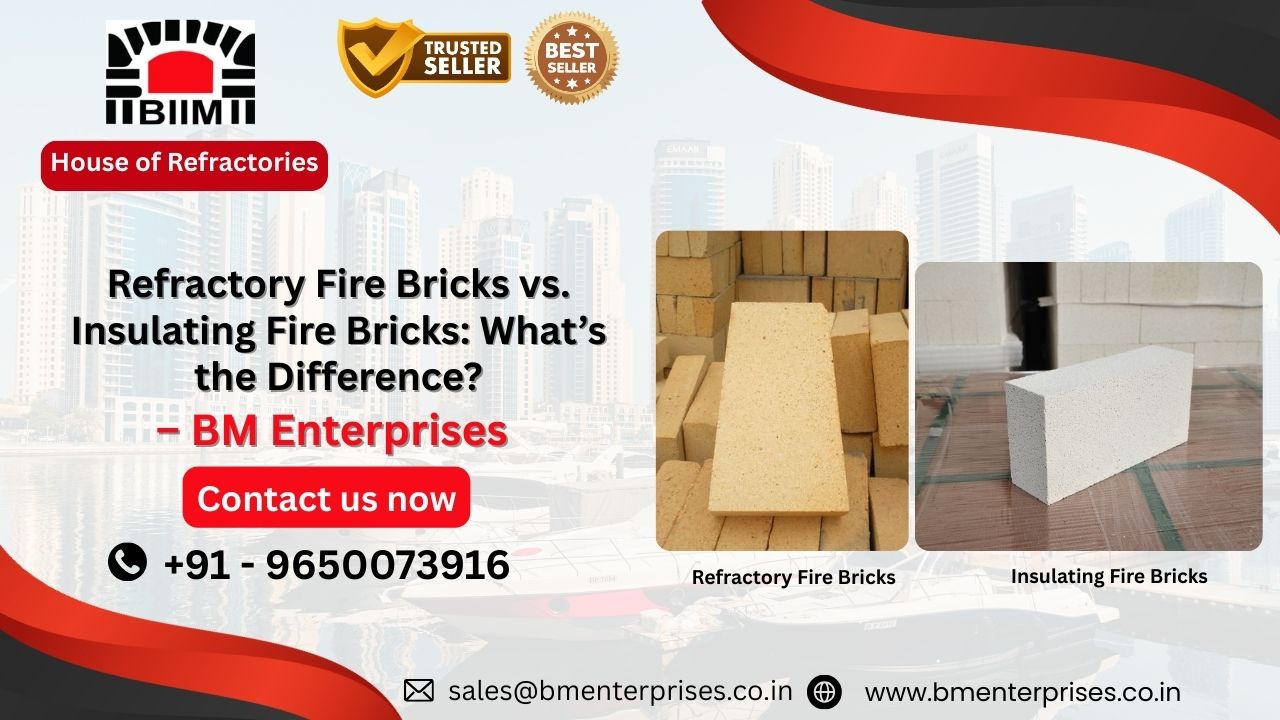
Refractory Fire Bricks vs. Insulating Fire Bricks: What’s the Difference?
Introduction to Fire Bricks
Fire bricks are the unsung heroes that operate in the background in high-temperature industrial applications. These bricks literally absorb heat from heavy-duty boilers to roaring furnaces. However, not every fire brick is the same.
Refractory fire bricks and
insulating fire bricks are two of the most popular varieties, and the decision between them can have a big impact on operating costs, efficiency, and performance.
What exactly distinguishes them, then? Let’s dissect it in straightforward, useful terms.
What Are Fire Bricks?
Bricks made specifically to withstand extremely high temperatures without losing their strength or shape are known as
fire bricks. They are resistant to mechanical stress, chemical corrosion, and heat shock, in contrast to regular bricks. Consider them as protective gear for industrial machinery that is subjected to extreme heat.
Why Choosing the Right Brick Matters
Choosing the incorrect kind of fire brick is just as ineffective as wearing a winter jacket in the summer. Longer service life, reduced maintenance costs, safety, and energy efficiency are all promised with the right brick.
Understanding Refractory Fire Bricks
What Are Refractory Fire Bricks?
Refractory fire bricks are robust, dense bricks designed to withstand constant, high temperatures. They frequently come into direct contact with flames, molten metal, or hot gases because they are used as the hot face lining.
Key Raw Materials Used
Usually, these bricks are made with:
- High alumina
- Fire clay
- Heat-resistant minerals, including silica
High alumina fire bricks are especially well-liked among these because of their exceptional durability and resistance to temperature.
Temperature Resistance and Strength
Depending on their composition, refractory fire bricks can tolerate temperatures between
1,400°C and over
1,800°C. They are perfect for load-bearing applications because they have a high compressive strength.
High Alumina Fire Bricks Explained
High alumina fire bricks contain a higher percentage of alumina (Al₂O₃), which improves:
- Refractoriness
- Resistance to slag
- Resistance to thermal shock
This makes them the go-to option for
refractory fire bricks in Delhi NCR as well as steel plants, cement kilns, and power plants throughout India.
Understanding Insulating Fire Bricks
What Are Insulating Fire Bricks?
Rather than withstanding high mechanical loads, the main purpose of
insulating fire bricks is to minimize heat loss. By acting as thermal barriers, they lower energy consumption and retain heat inside the furnace.
Lightweight Structure and Porosity
These bricks have a high porosity and are lightweight. Think of a sponge that is full of tiny air pockets; the trapped air is what makes it so insulating.
Thermal Insulation Performance
Heat moves through insulating fire bricks very slowly due to their low thermal conductivity. This keeps exterior surfaces cooler while maintaining constant interior temperatures.
The Function of Hot Face Insulation Bricks
Certain
hot face insulation bricks are designed to provide insulation while withstanding moderate direct heat. They fill the space between layers of backup insulation and dense refractory bricks.
Core Differences Between Refractory and Insulating Fire Bricks
Density and Weight
Insulating fire bricks are lightweight, whereas refractory fire bricks are dense and heavy. Strength and insulation capacity are directly impacted by density.
Conductivity of Heat
Refractory bricks are paired with insulating bricks because they conduct more heat. In contrast, insulating bricks significantly lessen heat transfer.
Mechanical Strength
Refractory fire bricks would undoubtedly prevail in a strength competition. Structural loads are not intended for insulating fire bricks.
Maximum Service Temperature
Insulating bricks are limited to lower temperature ranges based on their grade, whereas refractory fire bricks can withstand extremely high temperatures.
Applications of Refractory Fire Bricks
Industrial Furnaces and Kilns
Used widely as major linings in the ceramic, glass, steel, and cement industries.
Boilers, Chimneys, and Incinerators
They are perfect for places exposed to pressure and heat because of their resilience.
Refractory Fire Bricks in Delhi NCR and India
Refractory fire bricks are in high demand in India due to the country’s fast industrial growth, particularly in manufacturing centers like Delhi NCR.
Applications of Insulating Fire Bricks
Backup Insulation Layers
Installed to minimize heat loss behind refractory linings.
Energy-Saving Furnace Linings
By keeping internal temperatures constant, they drastically save fuel expenses.
Insulation Bricks in India – Growing Demand
As energy efficiency becomes a priority,
insulation bricks in India are seeing widespread adoption across industries.
Cost Comparison and Lifecycle Value
Initial Cost vs. Long-Term Savings
Refractory fire bricks usually cost more upfront but last longer under harsh conditions. Insulating bricks are cheaper and help save energy over time.
Maintenance and Replacement Factors
Using the right combination reduces wear and tear, lowering overall maintenance costs.
How to Choose the Right Fire Brick
Operating Temperature Requirements
Always match the brick’s rating with actual operating temperatures.
Structural Load Considerations
For load-bearing areas, refractory fire bricks are essential.
Energy Efficiency Goals
If reducing fuel costs is a priority, insulating fire bricks are non-negotiable.
Why BM Enterprises for Fire Bricks
Product Range and Quality Assurance
BM Enterprises offers a comprehensive range of:
- Refractory fire bricks
- Insulating fire bricks
- High alumina fire bricks
- Hot face insulation bricks
All products meet stringent quality standards.
Supply Across Delhi NCR and Pan India
As a trusted supplier, BM Enterprises serves clients across
Delhi NCR and throughout
India, ensuring reliable supply and technical support.
Conclusion
To put it simply,
insulating fire bricks retain the heat where it belongs, whereas
refractory fire bricks manage the heat. While the other offers efficiency and energy savings, the first offers strength and resistance. Like a strong wall and a cozy blanket, the majority of industrial systems depend on both. You may make more informed choices that enhance performance, safety, and cost effectiveness by comprehending their variations and uses. You have access to the appropriate resources, knowledge, and solutions when you work with
BM Enterprises.
Frequently Asked Questions (FAQs)
1. Can insulating fire bricks replace refractory fire bricks?
No. Insulating fire bricks lack the strength and heat resistance required for direct flame contact.
2. What are high-alumina fire bricks used for?
They are used in high-temperature and high-wear areas like steel furnaces and cement kilns.
3. Are insulating fire bricks suitable for boilers?
They are used as backup insulation, not as the primary hot face lining.
4. Where can I buy refractory fire bricks in Delhi NCR?
BM Enterprises supplies high-quality refractory fire bricks across Delhi NCR.
5. Why are insulation bricks important for energy efficiency?
They reduce heat loss, lower fuel consumption, and improve overall thermal efficiency.