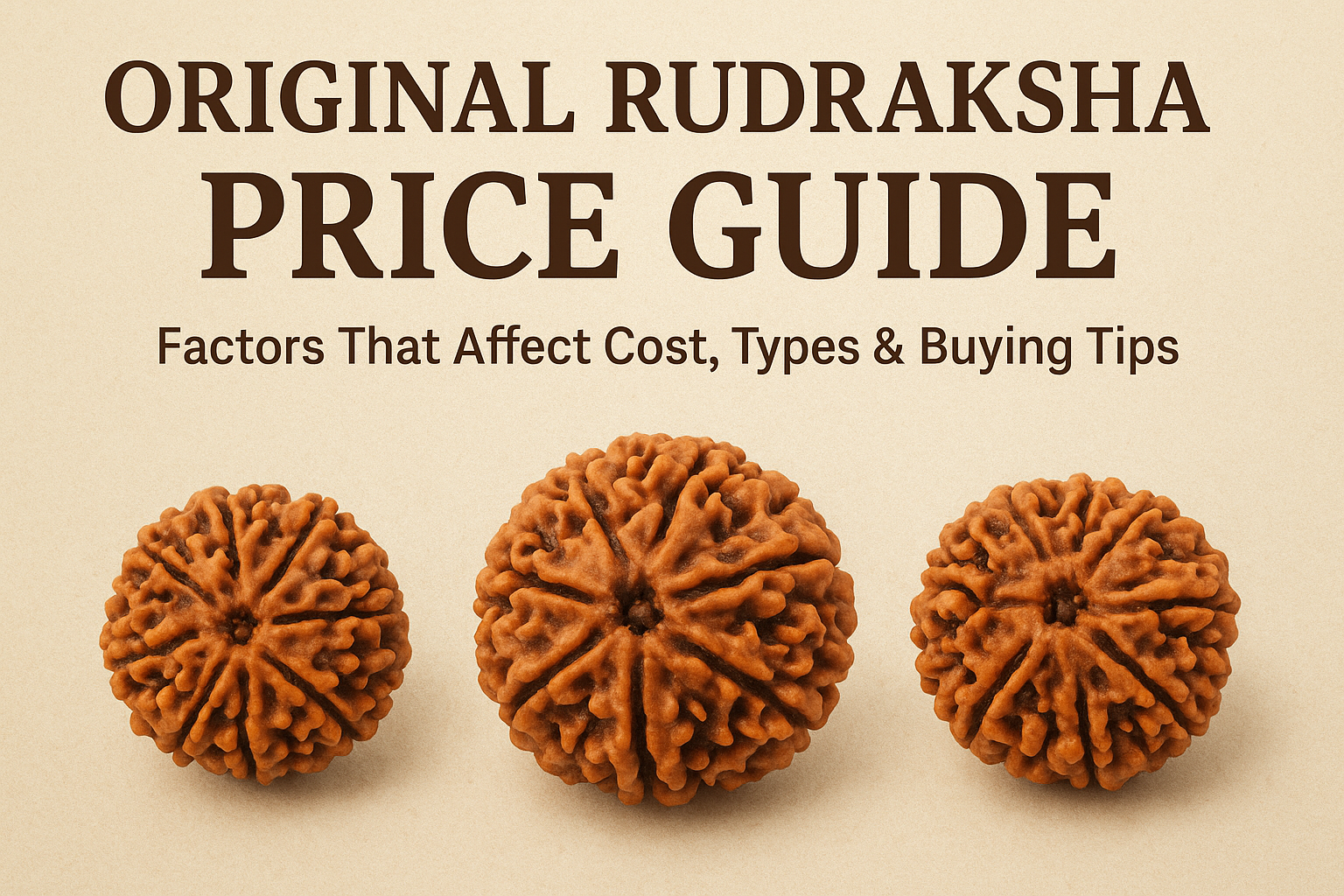
Original Rudraksha Price Guide: Factors That Affect Cost, Types & Buying Tips
If you’re looking to buy a rudraksha, but have no idea what they actually cost? It makes sense.
Rudraksha beads are sacred. Connected to Lord Shiva. They carry spiritual power. So naturally, they are of value.
You’ll see some for ₹100 and some for ₹1,00,000+. Why? Because while all rudraksha are spiritually significant, some are way rarer than others.
Some rudrakshas offer stronger benefits and are of higher quality. That’s why there’s a difference in the original rudraksha price. When you understand the value you’re getting for what you pay, it becomes much clearer why certain beads cost more than others
Let me break down what actually determines the cost.
Mukhi Count: The Biggest Price Driver
The number of lines on a bead (called Mukhis) is probably the biggest factor affecting the original rudraksha price and its spiritual value.
Budget-friendly:
- 5 Mukhi? Costs ₹500-₹2000. Most common type. Available everywhere.
- 4 Mukhi? Around ₹200-₹1000. Also pretty affordable.
- 6 Mukhi? Usually ₹500-₹2000. Still reasonable.
Mid-range:
- 7 Mukhi? Starts around ₹3000+. Getting rarer.
- 9 Mukhi? Around ₹5000-₹10,000. Actually valuable now.
- 11 Mukhi? Costs ₹8000-₹15,000. Pretty rare.
Premium/Collector:
- 14 Mukhi? Expect ₹15,000-₹25,000+. Very rare.
- 19-21 Mukhi? Can cost lakhs. Extremely scarce.
- 1 Mukhi? The rarest. Can cost ₹45,000+. Maybe more.
Higher mukhi beads are harder to find naturally. Rarity = higher price. It’s supply and demand.
Origin Makes a Huge Difference
Where the bead comes from seriously impacts the original rudraksha price.
Nepali Rudraksha:
- Most expensive. Considered most powerful.
- Bigger. Deeper, more visible lines.
- Better spiritual significance. Grown in Himalayan regions.
- Price: Can be 2-3x more than other origins.
- Example: A Nepali 5 Mukhi costs more than Indonesian 5 Mukhi.
Indonesian Rudraksha:
- More affordable. Smaller.
- Finer, more delicate lines.
- Still authentic and effective. Just different.
- Price: Generally 30-50% cheaper than Nepali.
- Good middle-ground option for budget buyers.
Indian (Bhadraksha):
- Cheapest option. Spiritually less potent according to texts.
- Not considered effective.
- Price: Super cheap. Sometimes ₹50-100.
- Not recommended if you want real benefits.
Sri Lankan:
- Available but rare. Medium pricing.
- Good quality, but less sought after than Nepal.
Size of Rudraksha Also Matters
Bigger rudraksha beads = higher original rudraksha price.
- Small beads? Cheaper. More available.
- Medium beads? Mid-range pricing. Standard option.
- Large beads? Much more expensive. Harder to find.
- Extra-large Nepali beads? Premium pricing. Rare finds.
Why? Larger beads are rarer naturally. They also carry more spiritual energy, supposedly. Collectors prefer them. So sellers charge more.
A large 5 Mukhi can cost way more than a small 5 Mukhi.
Quality and Condition Changes Everything
Not all beads are created equal. Quality directly affects the original rudraksha price.
High quality costs more:
- Smooth surface. No cracks or damage.
- Clear, well-defined Mukhis.
- Proper symmetry. Round shape.
- Natural colour. Not dyed or altered.
- Mature beads with strong energy.
Low quality costs less:
- Cracked or damaged beads.
- Blurry or unclear Mukhis.
- Irregular shape. Not round.
- Discolored or dyed appearance.
- Immature or weak beads.
Perfectly formed, mature beads command premium prices. Damaged or poor-quality beads go cheaply.
Certification and Testing Add Cost
Real original rudraksha price includes testing costs.
- Lab-certified beads cost more. But they’re verified as authentic.
- X-ray testing proves internal structure matches external lines.
- Microscopic examination reveals natural formation.
- Certificates from IGI, GIA, or other labs add credibility and cost.
- Non-certified beads are cheaper but riskier. Could be fakes.
Real sellers factor in testing costs. That’s why certified beads are pricier. You’re paying for proof.
Special Varieties Cost Way More
Certain rare types command massive prices.
Gauri Shankar:
- Naturally occurring double bead. Super rare.
- Can cost ₹10,000-₹50,000+ easily.
Trijuti:
- Three naturally fused beads. Extremely scarce.
- Price: ₹15,000-₹1,00,000+ depending on quality.
Ek Mukhi (1 Mukhi):
- The rarest. Barely available naturally.
- Price: ₹45,000 and way beyond.
Panch Mukhi:
- Most common but still valuable quality.
- Price: ₹500-₹5000 depending on origin and size.
These special types have collectors willing to pay big money. The original rudraksha price for rare types reflects their scarcity.
Weight and Maturity Affect Price
Heavier, mature beads cost more than light ones.
- Light beads = younger or hollow. Cheaper.
- Heavy beads = mature and potent. More expensive.
- Weight indicates age and spiritual power, supposedly.
- Collectors prefer heavier beads. They’re rare.
A heavy, well-preserved bead is worth more than a light, dry one. Weight matters.
How Energization Impacts Cost
Some sellers energize beads through rituals. That adds to the original rudraksha price.
- Non-energised beads? Base price. Cheaper.
- Energised by priests? Add ₹500-₹5000+.
- Vedic rituals done? Premium pricing.
- Chakra therapy stringing? Extra cost.
Market Demand and Trends
Prices fluctuate based on demand.
- During festival season? Prices might go up.
- High spiritual interest? Prices climb.
- Limited supply? Original rudraksha price surges.
- Collectors buying rare types? Prices spike.
Basically, what people want affects how much sellers charge. Simple economics.
Rudraksha Mala vs Single Rudraksha Pricing
A mala (string of beads) costs different than individual beads.
- Single bead? Lower price per bead.
- Mala with 108 beads? Way higher total cost.
- Quality malas? ₹5000-₹50,000+ depending on type.
- Budget malas? ₹1000-₹5000 for basic types.
You’re paying for multiple beads plus stringing work. Malas naturally cost more than single beads.
Red Flags in Original Rudraksha Price
Watch out for fake pricing.
- Suspiciously cheap rare beads? Probably fake.
- Are all beads priced the same regardless of type? Sketchy.
- No variation in size pricing? They’re lying.
- Extremely low prices compared to others? Run.
If the original rudraksha price seems too good to be true, it probably is.
Tips to Get the Best Value
Smart buying practices:
- Compare prices across multiple sellers
- Don’t always go for the cheapest option
- Check certification and origin
- Buy from established retailers
- Ask why prices vary between sellers
- Understand what you’re paying for
- Invest in quality if the budget allows
- Avoid suspiciously cheap beads
Rudraksha Buying Tips & Red Flags
Here are the buying tips to keep in mind while purchasing rudraksha beads online.
Tips to Get the Best Value:
- Compare the prices of rudraksha across multiple sellers.
- Don’t always go for the cheapest options. Check for lab-certified products only.
- Buy from established and trusted online retailers.
- Understand what you’re paying for. Includes product, shipping and after-purchase services.
- Invest in quality if the budget allows.
Red Flags to Watch Out:
- Suspiciously cheap, rare beads.
- All beads are priced the same regardless of type.
- No variation in size pricing.
- Extremely low prices compared to other sellers.
- If the price seems too good to be true, it probably is
If you want to avoid fake or low-quality rudraksha, you can explore trusted platforms like the Astroyogi Store, where genuine, lab-certified Rudraksha of all mukhis is available with clear pricing and authenticity assurance.
Real Talk
Real rudraksha carries Shiva’s energy and protects you. That’s why paying more matters: rare beads are spiritually potent, authentic ones are verified real, and quality beads retain their power. Cheap fakes give you nothing. Real ones give you blessings.
The point isn’t owning a bead. It’s inviting Shiva into your life through his tears. And that only happens with the real thing.