
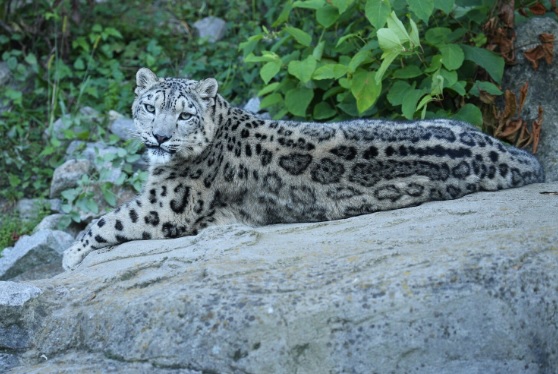
Myths and Facts About Snow Leopard Trekking in Ladakh
Snow leopard trekking in Ladakh has turned out to be one of the most desirable winter experiences for a naturalist, photographer, and trekker. Harsh geography, high-altitude villages, and winter make it an ultimate destination with the unique opportunity to spot one of the most elusive big cats in the world. However, as it becomes more popular, myths surrounding it create unrealistic standards. It would be beneficial to sort facts from fiction.
Myth 1: Snow Leopards Can Be Sighted Very Easily on Treks
A possible misconception about snow leopard trekking might be that there is an opportunity to spot snow leopards quite often. But snow leopard trekking in Ladakh involves scanning distant ranges and valleys for several hours.
Seeing them is possible but cannot be guaranteed. These cats have an excellent camouflaging technique and prefer staying stealthy.
The marks shown by actual trackers would normally include paw marks, scratch marks, and marks made as a form of territory. To track an actual animal, it would either require waiting and good weather.
Myth 2: The Trek Is Suitable for Anyone
It requires strong physical endurance because it occurs in thin, cool air and over uneven terrain.
There is usually a common notion among individuals that snow leopard expeditions are easy and gentle nature walks. It would be quite enough as a challenge if the altitude alone were tough on seasoned trekkers.
Having a good mental attitude and acclimatisation, and wearing warm clothing, are necessary for a successful ascent.
People with young offspring accompanying them and people with lung and heart problems should be careful before travelling on these routes.
Myth 3: Snow Leopards Are a Direct Threat to Humans
The idea that snow leopards attack humans appears to be groundless.
These have been described as lone predators who do not want humans around and will leave if they detect your presence.
Their prime target species would include blue sheep, ibex, marmots, and various other local prey. Long-distance walkers have been shown to sustain a low level of disruption so as not to impact either safety or ecological factors.
Myth 4: Trekking Only Happens with Deep Snow
Snow leopard trekking as a term might imply snow, but winter conditions are very variable from valley to valley in Ladakh.
Some paths are topped with a blanket of snow, while some paths are rocky. The fundamental reason for animal migration to lower places at this time of the year is due to the migration of prey and not because of snow.
Nevertheless, it is still important that tourists have appropriate clothing for winter, but they should not expect snow.
Myth 5: Local Communities Get Very Little Benefit
A common myth associated with tourism in the villages of Ladakh is that there is no value added. Furthermore, snow leopard trekking for responsible ends has emerged as a resource for survival and as a tool for enhancing livelihoods.
The homestay programmes offer additional income sources within households and offer an incentive not to disturb and not perceive wildlife as a source of livestock danger.
The community-based conservation organisations also get to benefit from the process through trekking permits and donations.
Important Facts that Should Be Known for Every Trekker
Fact 1: Skilled spotters
It is only because of the understanding and expertise of local trackers that snow leopard sightings are made possible. Local trackers have knowledge not only about the terrain but also about animal behaviour.
These people would be capable of reading signals that would never be detected by an untrained eye and would therefore make a successful sighting much more likely.
Fact 2: When Conservation Efforts Result in an Increase in Sightings
Despite these efforts at snow leopard conservation, there are still indications that snow leopard numbers might be levelling off in Ladakh.
Causing somewhat more frequent appearances compared with previous generations, but nowhere near guaranteed. Eco-friendly trekking methods still have an important role in modern conservation.
Fact 3: There Is More to Winter Landscapes than Wildlife Alone
There is more to life as a trekker. There are frozen rivers and stone villages and silent valleys. These winter travels in and around Ladakh stand out as adventure trips amidst so much cultural consumption and natural beauty.
Dream Land: A Local Touch to the Experience
Traverse travellers rely mainly on regional knowledge skills to navigate winter geography in Ladakh. Organisations like Dream Land are aware of the geography and weather conditions, as well as animal movement patterns, in remote villages. It goes toward balancing tourism and traditional ways of living as they have experience with homestays. Their spotters will make this trek more informative than just spotting, as some tourists will want knowledge about ecology. Understanding local ways and geography would impart knowledge beyond what most trekkers are interested in.
Conclusion
Snow leopard trekking in Ladakh could be more than just tracking an animal. It could be an experience involving waiting and suffering, learning and discovering, and being amazed and humbled. Delineating facts from fiction would enable tourists to travel with more accurate aims and dedication. It will reward all who believe in getting value not only from reaching but also from finding its presence there. And for all who seek authentic adventures in Ladakh, snow leopard trekking offers an unforgettable encounter with nature.