
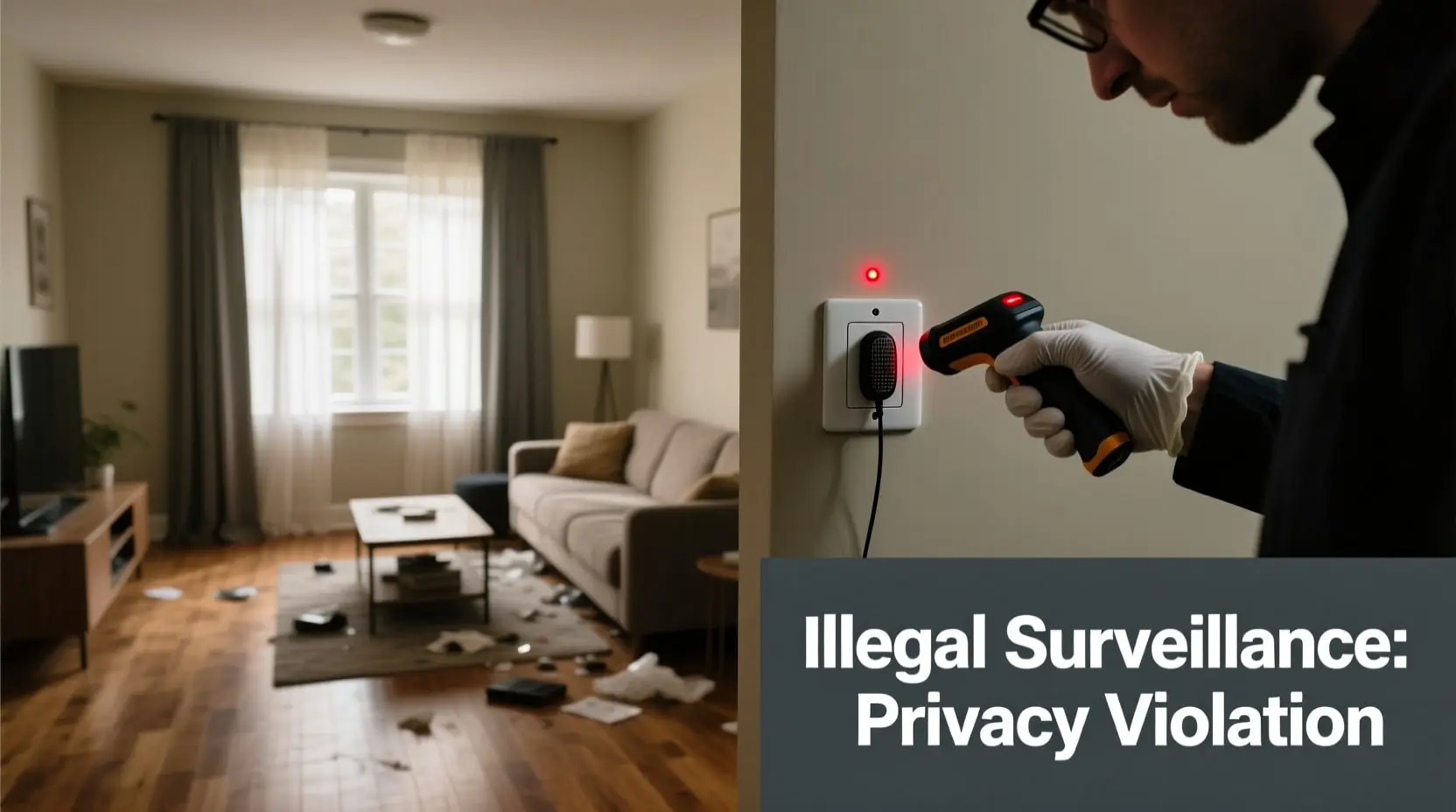
Is Bugging a House Illegal? Risks and Consequences
In an era where technology makes surveillance easier than ever, many people wonder about the boundaries of privacy in their own homes. The question “Is bugging a house illegal?” often arises in discussions about security, personal disputes, or even curiosity about hidden recording devices. Bugging typically refers to the covert installation of audio or video devices to monitor conversations or activities without consent. While it might seem like a straightforward way to gather information, the legal implications are complex and can lead to severe repercussions. Understanding the laws surrounding this practice is crucial to avoid unintentional violations that could result in criminal charges or civil lawsuits.
What Is Bugging a House?
Bugging a house involves placing electronic devices such as microphones, cameras, or GPS trackers in a residential property to secretly record or listen to private interactions. These devices can range from simple audio recorders hidden in everyday objects to sophisticated smart home hacks that turn thermostats or speakers into listening tools. The intent behind bugging is usually to gather evidence, monitor behavior, or invade privacy, but it crosses into illegal territory when done without proper authorization. Common scenarios include suspicious spouses installing hidden cameras or landlords secretly monitoring tenants. Regardless of the motive, the core issue revolves around expectations of privacy in one’s home, a fundamental right protected under the U.S. Constitution’s Fourth Amendment, which guards against unreasonable searches and seizures.
Technological advancements have made bugging more accessible. Devices like wireless cameras or apps that activate phone microphones can be purchased online for minimal cost. However, the ease of access doesn’t equate to legality. Bugging differs from standard home security systems, which are often visible and used for protection rather than covert spying. When bugging occurs, it can capture not just audio but also video, leading to broader privacy concerns. For instance, hacking into smart devices like Amazon Echo or Google Home to eavesdrop is a modern form of bugging that amplifies risks in connected households.
Is Bugging a House Illegal?
At its core, bugging a house without consent is generally illegal across the United States, as it violates federal and state privacy laws. The federal Wiretap Act, part of Title III of the Omnibus Crime Control and Safe Streets Act of 1968, prohibits the intentional interception of wire, oral, or electronic communications without a court order or the consent of at least one party involved. This means that planting a bug to record conversations you’re not part of is a clear violation, potentially leading to federal charges. Even in your own home, if the recording captures others without their knowledge or consent in situations where privacy is expected, it can still be unlawful.
State laws add another layer of complexity. In one-party consent states, which include the majority, like Texas, you can legally record a conversation if you’re participating in it, but bugging to eavesdrop on others without any consenting party is illegal. Two-party (or all-party) consent states, such as California, Florida, and Illinois, require everyone involved to agree to the recording, making unauthorized bugging even riskier. For example, secretly installing a microphone in a living room to monitor guests would breach these laws, as homes are considered private spaces where individuals have a reasonable expectation of privacy.
Federal Laws on Bugging
Federal regulations set the baseline for bugging prohibitions. The Electronic Communications Privacy Act of 1986 amended the original Wiretap Act to include electronic communications like emails and texts, but its principles apply to home bugging. Under 18 U.S.C. § 2511, it’s illegal for private individuals to intercept communications without consent or a warrant. Law enforcement can obtain court approval for surveillance in criminal investigations, but this requires probable cause and judicial oversight. Private citizens, however, face strict bans, with no room for self-help bugging in personal matters.
The Foreign Intelligence Surveillance Act covers national security-related bugging, but that’s irrelevant for everyday scenarios. Importantly, evidence obtained through illegal bugging is often inadmissible in court under the exclusionary rule, meaning it can’t be used against someone in legal proceedings. This federal framework preempts less restrictive state laws, ensuring a minimum level of protection nationwide.
State Variations: One-Party vs. Two-Party Consent
State laws on recording and bugging vary significantly, influencing how bugging a house is treated. Thirty-eight states and the District of Columbia follow one-party consent rules, where only one person in the conversation needs to know about the recording. This allows homeowners to record interactions they’re part of, like a nanny cam with audio if the owner is present. However, planting bugs to spy on absent parties remains illegal.
In contrast, eleven states require two-party consent: California, Connecticut, Florida, Illinois, Maryland, Massachusetts, Michigan, Montana, Nevada, New Hampshire, Pennsylvania, and Washington. Here, all individuals must consent, making covert bugging particularly hazardous. For instance, in California, violating this can lead to fines up to $2,500 per violation and up to a year in jail. Some states, like Vermont, lack specific statutes and rely on federal law, while others, like Hawaii, apply two-party consent in certain contexts. Always check local laws, as nuances exist—for example, video without audio might be allowed in public areas but not private ones.
Exceptions to the Rule
There are limited exceptions where bugging might be legal. Law enforcement with a warrant can install bugs for investigations, as outlined in federal guidelines. Homeowners can use visible security systems for protection, but hidden devices in privacy-sensitive areas like bathrooms are prohibited. Parental monitoring of minors in the home is often allowed under one-party consent if the parent is involved, but this doesn’t extend to adults.
In business contexts, employers might bug company property with notice, but residential bugging lacks such leeway. Consent is key—if all parties agree in writing, recording is permissible. However, forging consent or using bugs post-consent revocation turns it illegal.
Risks of Illegal Bugging
Engaging in illegal bugging carries substantial risks beyond legal troubles. Privacy invasion can erode trust in relationships, leading to emotional distress for victims. Technologically, bugs can be detected through sweeps, exposing the perpetrator and inviting retaliation. Cybersecurity threats arise if devices are hackable, potentially turning the bugger into the bugged.
Legally, risks include being sued for invasion of privacy, where victims can claim damages for mental anguish or reputational harm. Trespassing charges apply if installation involves unauthorized entry. In divorce cases, illegal recordings can backfire, harming the bugger’s credibility in court.
Consequences and Penalties
The consequences of illegal bugging are severe and multifaceted. Federally, violations can result in up to five years in prison and fines up to $250,000 for individuals. State penalties vary: in Texas, it’s a felony with up to two years in jail and $10,000 in fines. Civil suits allow for compensatory damages, punitive awards, and attorney fees under 18 U.S.C. § 2520.
Repeat offenses escalate penalties, and professional repercussions like license revocation for investigators can occur. Illegally obtained evidence is suppressed, weakening cases, and public exposure can damage reputations permanently.
How to Detect if Your House is Bugged
If you suspect bugging, look for signs like unusual static on phones, odd battery drain on devices, or unfamiliar objects. Professional bug sweeps using RF detectors can identify hidden devices. Secure your Wi-Fi, change passwords regularly, and inspect smart devices. If confirmed, document evidence and contact authorities without removing the bug to preserve the chain of custody.
Legal Alternatives to Bugging
Instead of risking illegality, consider legal options like open communication or hiring licensed private investigators who follow laws. Install visible security cameras with signs, or use apps requiring consent for monitoring. In legal disputes, gather evidence through proper channels like subpoenas rather than covert means.
Navigating the complexities of surveillance in today’s world requires awareness of both technology and law. Ultimately, the question “Is bugging a house illegal?“ underscores the importance of respecting privacy rights to avoid the heavy risks and consequences that come with violations. By staying informed and choosing ethical alternatives, individuals can protect themselves without crossing legal lines.