
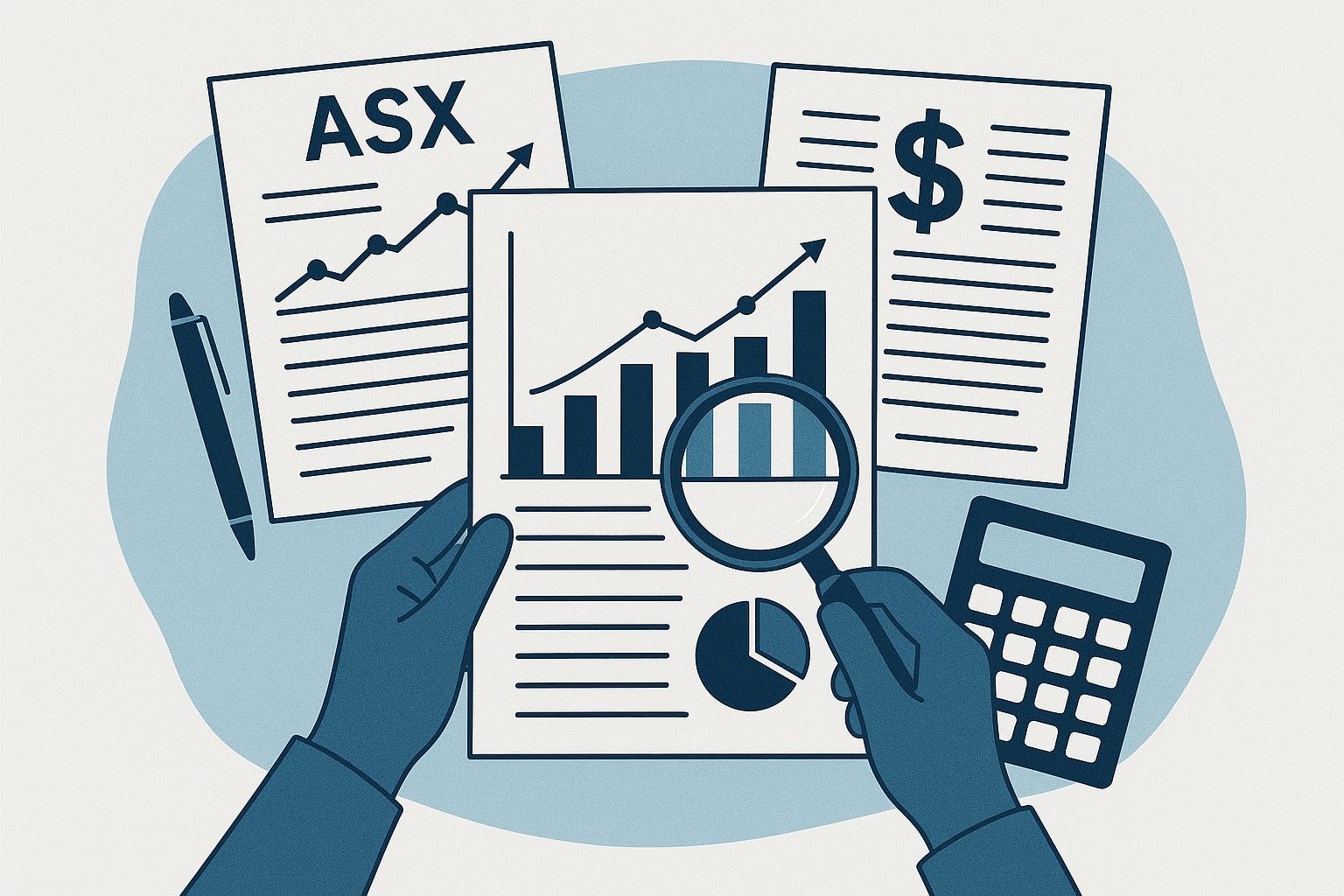
How to Read ASX Company Reports: A Beginner’s Guide
As a new investor, learning how to read ASX company reports is one of the most valuable skills you can develop during Beginner Investing Month. Company reports offer transparent insights into a business’s financial performance, strategic direction, risks, and growth opportunities. Whether you are building a diversified portfolio or evaluating a potential stock pick, these documents act as your roadmap to making informed decisions.
ASX-listed companies release various reports throughout the year, and understanding how to interpret them helps you avoid speculation and invest with clarity and confidence.
Types of ASX Company Reports You Should Know
Before diving into analysis, it’s essential to recognise the major types of reports you will encounter on the ASX.
Annual Reports
These comprehensive documents provide a full-year overview of a company’s operations, financials, governance structure, and future strategy. They typically include:
-
Financial statements
-
Director’s report
-
Operating and financial review
-
Auditor’s statement
Annual reports are the best starting point when learning to read ASX company reports due to their depth and detail.
Half-Yearly Reports
As the name suggests, these provide a six-month snapshot of performance. They help investors track trends between full-year releases.
Quarterly Reports
Common in mining, biotech, and energy sectors, quarterly updates highlight:
-
Cash flow
-
Project updates
-
Exploration results
-
Operational milestones
These are useful when you want to monitor sector-specific companies more frequently.
Market Announcements
These short updates cover price-sensitive information, including:
-
Earnings upgrades or downgrades
-
Leadership changes
-
Acquisitions and mergers
-
Capital raisings
For many investors, keeping up with announcements is crucial for timely investment decisions.
Key Sections to Focus on When Reading ASX Company Reports
Once you know the types, the next step is learning what to look for. Here are the most important sections to focus on:
1. Financial Statements
The financial statements form the backbone of most company reports. They typically include:
-
Profit and Loss Statement: Shows revenue, expenses, and profit.
-
Balance Sheet: Shows assets, liabilities, and equity.
-
Cash Flow Statement: Shows how cash enters and exits the business.
Understanding these helps you evaluate a company’s profitability, liquidity, and long-term financial health. As you read ASX company reports, comparing current results with previous periods can help identify trends.
2. Management Discussion & Analysis (MD&A)
Often found in the Operating and Financial Review (OFR), this section gives insight into:
-
How management perceives performance
-
Strategic priorities
-
Market conditions
-
Risks and opportunities
MD&A offers context to the raw numbers and reveals what the company plans next.
3. Notes to Financial Statements
This is where you’ll find detailed explanations that clarify accounting decisions, breakdowns of major items, and disclosures on risks. Many beginners skip this section, but it can reveal valuable insights into debt structure, contingent liabilities, and revenue sources.
4. Corporate Governance Statement
This outlines how the company is run, who is on the board, and what policies guide decision-making. Strong governance often correlates with lower long-term risk.
5. Risk Factors
Every company faces risks, whether operational, regulatory, or financial. Understanding these risks helps you assess whether a stock fits your risk appetite.
Interpreting Financial Ratios for Better Analysis
One of the best ways to analyse numbers in ASX reports is by using financial ratios. They simplify complex data points and highlight strengths or weaknesses.
Profitability Ratios
-
Net Profit Margin
-
Return on Equity (ROE)
-
Return on Assets (ROA)
These ratios help determine whether a company is generating adequate returns.
Liquidity Ratios
-
Current Ratio
-
Quick Ratio
These measure how easily a company can meet short-term obligations.
Leverage Ratios
-
Debt-to-Equity Ratio
-
Interest Coverage Ratio
These show whether a company is carrying too much debt.
Valuation Ratios
-
Price-to-Earnings (P/E) Ratio
-
Dividend Yield
These help determine whether a stock is undervalued or overvalued when compared to peers.
Using ratios consistently will strengthen your ability to read ASX company reports with confidence and clarity.
Using Management Commentary to Identify Growth Potential
Numbers alone don’t tell the entire story. Management commentary can reveal:
-
New expansion plans
-
Market trends
-
Competitive advantages
-
Challenges and changes in direction
This section is especially useful for beginners who want to understand whether a company’s future looks promising.
How to Spot Red Flags in ASX Company Reports
Not all reports indicate good performance. Here are common warning signs every beginner should watch for:
Declining Revenue or Margins
A downward trend may suggest competitive pressures or operational issues.
High or Increasing Debt
If debt grows faster than revenue, it could point to financial stress.
Negative Cash Flow
A consistently negative cash flow can make operations unsustainable.
Frequent Capital Raisings
Companies in constant need of funding may be struggling to generate profit internally.
Auditor Concerns
Audit reports that highlight uncertainty or irregularities should never be ignored.
Learning to identify these red flags will help you avoid risky investments.
Comparing Reports Year-Over-Year for Better Understanding
A single report doesn’t give the full picture. When you read ASX company reports, compare:
-
Revenue growth over multiple years
-
Shifts in expenses
-
Changes in debt levels
-
Trends in cash flow
-
Progress toward strategic goals
This multi-year analysis helps separate temporary issues from long-term patterns.
Tools and Platforms to Help You Read Reports Effectively
Several online tools make reviewing ASX reports easier for beginners:
-
ASX Website – Official source for announcements
-
Company Investor Relations Pages – Direct access to annual and half-yearly reports
-
Financial News Platforms – Provide summaries and expert reviews
-
Stock Charting Tools – Combine market data with company reports
Using these tools together helps you become a more informed investor.
Final Thoughts: Mastering ASX Reports as a Beginner
Learning how to read ASX company reports is a foundational skill for every beginner investor. By understanding financial statements, interpreting management commentary, tracking key ratios, and identifying red flags, you equip yourself to make smarter, more confident investment decisions.
During Beginner Investing Month, take time to explore reports of companies you’re interested in. The more you read, the more intuitive the process becomes—and the stronger your investment strategy will grow.