
How Many Numbers Are on a Clock and Why It Matters
Clocks are ubiquitous in our daily lives, silently ticking away as we go about our routines. But have you ever stopped to ponder how many numbers are on a clock? At first glance, it seems straightforward—most analog clocks display the numbers 1 through 12. Yet, this simple question opens the door to a fascinating exploration of timekeeping history, design principles, and even psychological impacts. Understanding the numerical layout on clocks isn’t just trivia; it influences how we perceive time, affects product design, and reflects cultural evolution. In this article, we’ll delve into the details, uncovering why the standard clock has exactly 12 numbers and what that means for everything from education to modern technology.
The origins of the clock’s numerical system trace back thousands of years. Ancient civilizations like the Egyptians and Babylonians divided the day into 24 hours, but the 12-hour format we see on most clocks stems from the Babylonian sexagesimal system, which is based on the number 60. This is why we have 60 minutes in an hour and 60 seconds in a minute. The clock face, or dial, typically features 12 hours because it represents half of the 24-hour day, allowing for AM and PM distinctions. Each number marks an hour, with the hands pointing to indicate minutes and seconds. This design has persisted because it’s intuitive and balanced, creating a circular symmetry that’s easy for the human eye to read at a glance.
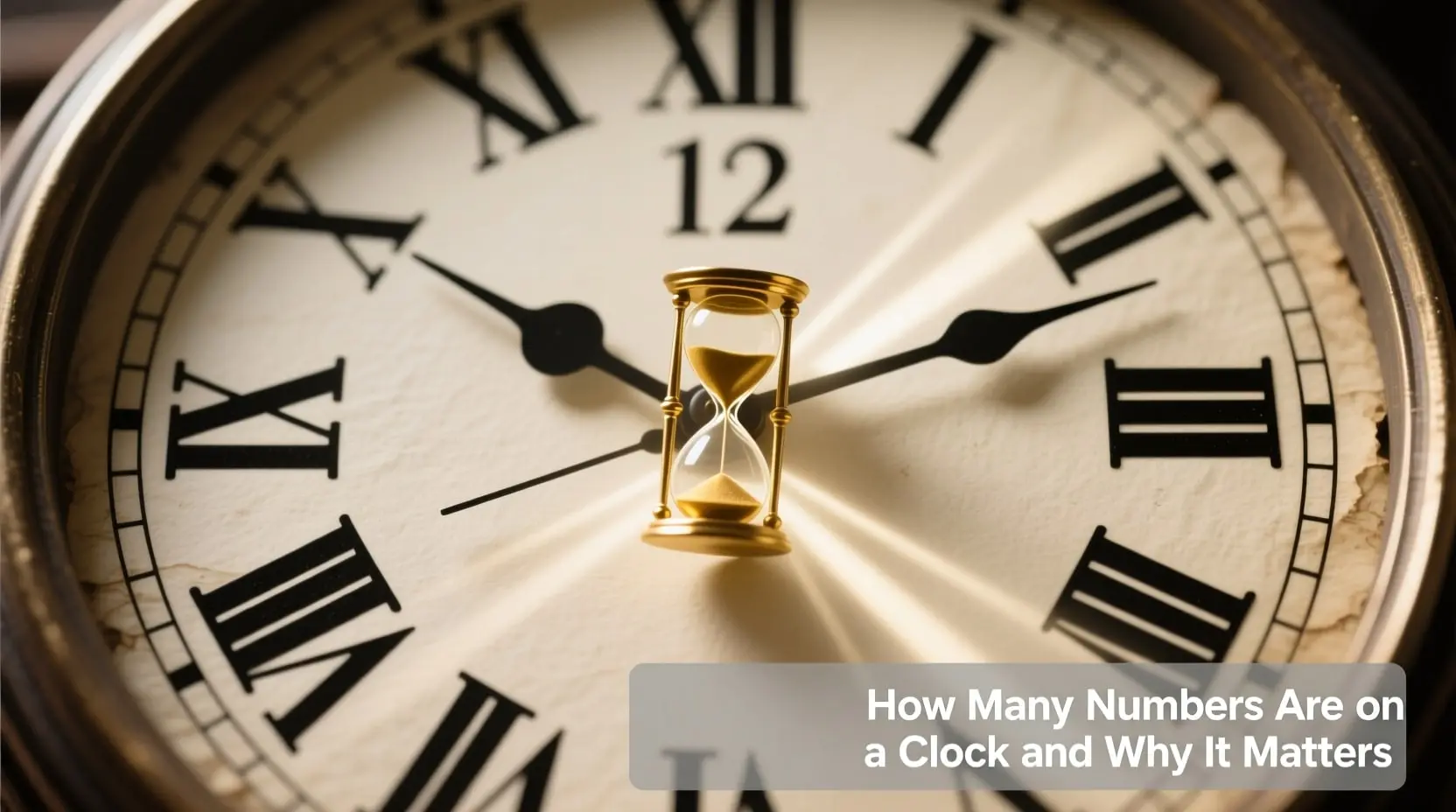
Beyond the basics, clocks vary widely in their presentation of numbers. Traditional grandfather clocks or wall clocks often use Arabic numerals—1, 2, 3, up to 12—for clarity. In contrast, many elegant watches or antique timepieces employ Roman numerals, such as I, II, and III, up to XII. Interestingly, on these Roman numeral clocks, the number 4 is sometimes represented as IIII instead of IV, a tradition rooted in aesthetic balance and historical watchmaking practices. This quirk dates back to the sundials of ancient Rome and was carried over to mechanical clocks to avoid visual confusion with the VI (6) on the opposite side. Digital clocks, on the other hand, don’t have a fixed set of numbers on a face; instead, they use LED or LCD displays that can show any combination from 00:00 to 23:59 in 24-hour format or 12:59 in 12-hour format. Here, the “numbers” are digits that change dynamically, but the core concept revolves around representing time through numerical values.
The Evolution of Clock Design
Clock design has evolved significantly over centuries, influenced by technological advancements and cultural needs. In the Middle Ages, early mechanical clocks in Europe often featured only an hour hand and a single bell to chime the time, with no numbers at all. It wasn’t until the 17th century, with the invention of the minute hand by Dutch astronomer Christiaan Huygens, that detailed numbering became essential. The standard 12-number layout allowed for precise time reading, which was crucial during the Industrial Revolution when punctuality became a societal norm. Factories, railways, and schools all relied on synchronized clocks to maintain order, making the clear display of numbers a practical necessity.
In modern times, minimalist designs have challenged the traditional setup. Some contemporary clocks, like those from brands such as Braun or IKEA, feature no numbers at all, relying solely on hour and minute markers. These “numberless” clocks emphasize simplicity and aesthetics, appealing to those who prefer a clean, uncluttered look. However, this raises questions about accessibility—for children learning to tell time or individuals with visual impairments, numbered clocks are invaluable. Educational tools often start with clocks that have bold, clear numbers to teach concepts like quarters, halves, and full hours. The presence of 12 numbers helps build foundational math skills, as kids learn to count in increments and understand circular measurement.
How Many Numbers Are on a Clock in Different Cultures?
Exploring global variations reveals even more about how many numbers are on a clock. In many Western countries, the 12-hour analog clock reigns supreme, but in military or international contexts, 24-hour clocks are preferred. A 24-hour clock face would theoretically have numbers from 1 to 24, but these are rare on analog dials due to overcrowding; instead, they’re common in digital formats. For instance, European train stations often use 24-hour digital displays for clarity across languages and time zones. In some Asian cultures, like in China, traditional water clocks or incense clocks didn’t use numbers at all, relying on symbolic markings. Modern Chinese clocks might blend Eastern and Western elements, sometimes incorporating auspicious numbers like 8 for good luck while sticking to the 12-number standard.
Islamic clocks present another intriguing case. Many mosque clocks feature Arabic numerals (which are actually of Indian origin but were adopted in the Arab world) and may include additional markings for prayer times. The standard still hovers around 12 numbers, but the “why it matters” aspect ties into religious observance—accurate timekeeping ensures adherence to the five daily prayers. Similarly, in Jewish tradition, clocks in synagogues might use Hebrew numerals, but again, the count remains 12. These cultural adaptations highlight how the numerical structure of clocks isn’t arbitrary; it’s deeply intertwined with societal values, rituals, and daily life.
Psychological and Practical Implications
Why does the number of numbers on a clock matter from a psychological standpoint? Human cognition thrives on patterns and familiarity. The 12-number layout creates a predictable rhythm, making it easier to estimate time without precise calculation. Studies in cognitive psychology suggest that circular displays with evenly spaced markers enhance our ability to process temporal information quickly. For example, glancing at a clock with numbers allows us to instantly know if it’s “quarter past” or “half past,” terms derived directly from the 12-segment division. This efficiency is vital in high-stress environments like hospitals or airports, where split-second decisions depend on rapid time assessment.
On a practical level, the standard numbering affects product manufacturing and user experience. Watchmakers must balance legibility with style; too many numbers clutter the face, while too few can confuse users. In the digital realm, smartwatches like the Apple Watch or Fitbit often mimic analog designs with customizable faces, allowing users to choose between 12 numbers, Roman numerals, or even Arabic-Hindu numerals. This flexibility caters to personal preferences but underscores the enduring appeal of the traditional 12. Moreover, in education, clocks with numbers serve as tools for teaching fractions and angles—each hour represents 30 degrees on the 360-degree circle, reinforcing geometry lessons.
Accessibility is another key reason why the numbering matters. For people with dyslexia or cognitive challenges, clocks with prominent numbers reduce errors in time reading. Organizations like the Royal National Institute of Blind People advocate for high-contrast, numbered dials in public spaces. In contrast, overly artistic clocks without numbers might look appealing but can alienate certain users, emphasizing the need for inclusive design.
Modern Innovations and Future Trends
As technology advances, the concept of “numbers on a clock” is being redefined. Smart home devices like Amazon Echo or Google Nest display time digitally, often without a traditional face, using voice commands instead. Wearables integrate time with health metrics, where numbers flash for heart rate alongside the clock. Yet, even in these innovations, the foundational 12-hour cycle persists in many interfaces. Looking ahead, augmented reality (AR) clocks projected via glasses or holograms might eliminate physical numbers altogether, relying on AI to interpret time verbally or visually.
Sustainability also plays a role in why clock numbering matters today. Eco-friendly clocks made from recycled materials often prioritize minimalism, reducing ink and production costs by using fewer or no numbers. This trend aligns with broader environmental goals, showing how even small design choices contribute to larger impacts.
In conclusion, reflecting on how many numbers are on a clock—typically 12 on analog models—reveals much about human ingenuity and the passage of time itself. From historical roots to cultural adaptations and psychological benefits, this seemingly simple feature shapes our world in profound ways. Whether you’re glancing at a wristwatch or setting an alarm on your phone, appreciate the thought behind those numbers; they do more than tell time—they connect us to centuries of progress and remind us of time’s relentless march forward.