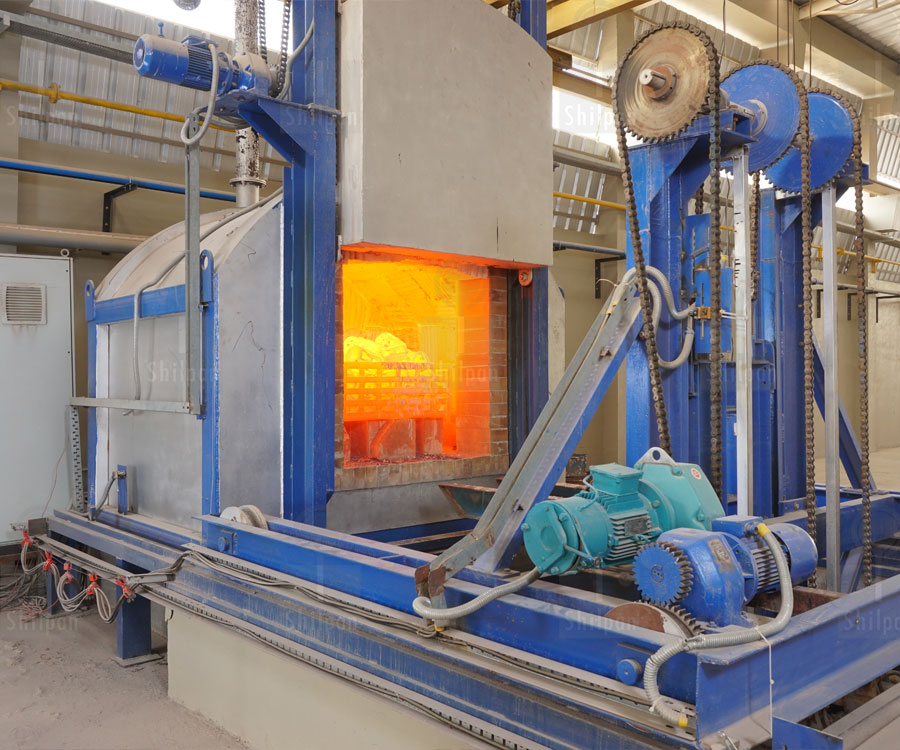
How Indian Sand Casting Manufacturers Handle Size, Weight, and Complexity?
Introduction
Sand casting technology sustains the mainstay in making massive and complex metal parts in industries where geometric flexibility and cost performance cannot be sacrificed. Starting from making the housing of the pump and engine blocks to the manufacture of massive valve cases and machine frames, the coming challenges to the industry get easily met in the manufacture of the parts by the sand casting manufacturers in India over the past decade as the industry has become dependent on them for making bigger sizes and complicated parts.
This capability did not appear overnight. It is a function of process maturity and engineering and operational discipline developed under production pressure
Managing Large Casting Sizes Without Structural Distortion
Large sand castings introduce problems that scale non-linearly. As size increases, metal flow, cooling behavior, and mold stability become harder to control.
Mold Design for Structural Stability
Indian foundries producing large-format castings rely on reinforced mold boxes, controlled sand compaction, and engineered gating layouts. Mold collapse, erosion, and dimensional shift are equally addressed at the design stage, not corrected later.
Controlled Metal Flow
Pouring large volumes of molten metal creates turbulence risks. Flow velocity, runner geometry, and sprue design are engineered to minimize air entrapment and oxide formation. This discipline allows sand casting manufacturers India to maintain internal soundness even in oversized components.
Handling Heavy Casting Weights Without Compromising Integrity
Weight introduces its own challenges. Thick sections cool slower, trap gases, and invite shrinkage defects.
Section Thickness Management
Heavy castings are not poured blindly. Wall thickness transitions are optimized to avoid hot spots. Chills and risers are placed strategically to guide solidification rather than fight it.
Solidification Control
Directional solidification remains central to heavy casting success. Indian manufacturers use feeding systems designed to ensure metal flow continues toward critical sections during cooling, preventing internal voids.
This approach allows multi-ton castings to perform reliably under load.
Complexity Through Core Engineering, Not Guesswork
Complex geometry separates capable foundries from volume producers.
Advanced Core Making
Intricate internal passages, undercuts, and cavities are formed using precision cores with controlled sand properties. Core strength, collapsibility, and placement accuracy determine whether complexity succeeds or fails.
Core Assembly Accuracy
Complex castings often involve multiple cores assembled inside a single mold. Alignment precision is critical. Indian foundries supplying global OEMs treat core assembly as a controlled operation, not manual improvisation.
This capability defines why sand casting manufacturers India are trusted with geometrically demanding components.
Sand System Control as a Quality Lever
Sand is not a filler material. It is a process variable.
Sand Property Consistency
Grain size distribution, moisture content, permeability, and binder ratios are monitored continuously. Variations affect surface finish, gas escape, and dimensional accuracy.
Reclamation and Reuse Discipline
Reclaimed sand is conditioned to match fresh sand performance. Poor control here leads to defects that cannot be machined away.
Foundries that master sand systems achieve repeatability across batches, regardless of casting size.
Pattern Engineering for Dimensional Accuracy
Patterns determine geometry long before metal is poured.
Pattern Material Selection
Large and complex castings require durable patterns that resist wear and deformation. Indian manufacturers increasingly use metal and composite patterns where dimensional stability matters.
Shrinkage Allowance Control
Different alloys shrink differently. Patterns incorporate calculated allowances based on section thickness and cooling behavior, not generic factors.
Precision at the pattern stage reduces downstream correction.
Metallurgical Control Across Varying Section Sizes
Large castings rarely cool uniformly.
Alloy Selection Based on Application
Carbon steel, alloy steel, ductile iron, and gray iron are selected based on load, pressure, and environmental exposure. Chemistry is adjusted to support both thick and thin sections within the same casting.
Microstructure Uniformity
Heat treatment is used to equalize microstructure across sections. Without this, heavy castings develop brittle zones or hardness gradients.
This metallurgical discipline distinguishes serious sand casting manufacturers India from casual producers.
Dimensional Control in Large and Complex Castings
Machining allowances exist for a reason, but excessive deviation signals weak control.
Mold Alignment Precision
Large molds are aligned using fixtures and reference points to prevent mismatch. Cope and drag alignment becomes critical as size increases.
Post-Casting Measurement
Large castings are measured using laser trackers, templates, or coordinate measurement techniques adapted for scale. Verification ensures that machining starts with predictable geometry.
Dimensional discipline reduces scrap and rework.
Defect Prevention Over Defect Repair
Repair welding is sometimes unavoidable, but it is not a strategy.
Defect Prediction at Design Stage
Simulation tools and empirical knowledge are used to anticipate shrinkage, porosity, and flow-related defects. Preventive design reduces reliance on post-casting correction.
Controlled Pouring Practices
Temperature control, pouring rate, and ladle handling influence defect formation. Experienced operators supported by documented procedures make the difference.
Preventive quality costs less than corrective quality.
Process Integration at PRANSTON
At PRANSTON, sand casting capability is built around controlled mold design, disciplined sand management, and metallurgical consistency across sizes and weights. Large and complex castings are treated as engineered products rather than variable outcomes.
This approach reflects how advanced Indian foundries align process control with application demands, especially in export-driven programs.
Logistics and Handling of Heavy Castings
Manufacturing does not end at shakeout.
Safe Handling Infrastructure
Cranes, fixtures, and handling tools are designed to move heavy castings without inducing stress or damage. Mishandling can introduce cracks invisible to inspection.
Surface Protection
Large castings are protected against corrosion and mechanical damage during storage and transit. This preserves integrity before machining or assembly.
Handling discipline protects manufacturing effort.
Why Global Buyers Trust Indian Sand Casting for Complexity
The trust is earned through execution.
Indian foundries handle size through structural mold engineering, weight through controlled solidification, and complexity through advanced core systems. These capabilities are supported by metallurgical discipline, dimensional control, and process repeatability.
This is why sand casting manufacturers India continue to receive complex, Also high-risk components rather than being limited to commodity work.
Conclusion
Basically size, weight, and complexity expose weaknesses in sand casting faster than any inspection report. Indian manufacturers that mastered mold stability, sand control, core engineering, and metallurgical consistency now operate confidently in this space.
The result is not just larger or heavier castings, but predictable performance under real operating conditions. That reliability explains the growing global reliance on Indian sand casting for components where failure is not an option and complexity is unavoidable.