

How DVSA Test Routes Guide Learners to Prepare Effectively
Preparing for a driving test requires more than just knowing road rules. Learner drivers must feel confident in real traffic, handle busy junctions, adapt to varying speeds, and stay calm while making quick decisions. One of the most effective ways to achieve this is through structured practice based on DVSA driving test routes. These routes reflect the real scenarios examiners use to assess a learner’s skills, from roundabouts and lane changes to manoeuvres and speed control. By training with route-focused guidance, learners can remove uncertainty, build familiarity with the test environment, and approach the driving test with stronger confidence and readiness.
Why Understanding Test Routes Matters
Although every test route varies slightly depending on the area and traffic conditions on the day, examiners follow consistent principles. They select road types, junction styles, and manoeuvre locations designed to assess skill in realistic situations. When learners understand these patterns, they experience several advantages.
A major benefit is reduced test-day anxiety. Many learners fear unexpected areas or unfamiliar junctions. With route-based preparation, they already understand the types of situations they’ll face. This familiarity encourages calm, steady driving.
Another advantage is that practice becomes targeted. Instead of spending time on roads unlikely to be tested, learners focus on complex roundabouts, narrow lanes, dual carriageways, one-way systems and residential streets with parked vehicles. These are commonly included because they thoroughly assess observation, positioning, speed judgement and hazard awareness.
Finally, route awareness helps learners understand the logic behind the examiner’s choices. This makes the test feel more structured and less unpredictable. Knowing what types of roads may appear does not give an unfair advantage; it simply allows learners to build the skills needed to drive safely in a range of situations.
What DVSA Test Routes Typically Include
Every test centre is required to assess a range of essential driving skills. For that reason, most routes include similar categories of road types and decision-making environments. Learners who prepare with this in mind often find the experience more manageable.
Below are typical components found across dvsa driving test routes, regardless of the region:
- Small and large roundabouts
- Busy traffic-controlled junctions
- Unmarked or partially marked crossroads
- Residential roads with tight spacing
- Dual carriageways requiring higher-speed judgement
- Mini-roundabouts that test quick decision-making
- Complex right-turn filters or staggered junctions
- Roads with bus lanes and variable signage
- Areas suitable for pulling over and moving off safely
Most routes also incorporate a manoeuvre such as parallel parking, bay parking, or pulling up on the right. Hill starts, independent driving using signs or sat-nav, and controlled stops are often added depending on the route layout.
Many learners use resources that allow them to download driving test routes for free. While these are not official DVSA publications, they are based on the collective experience of learners and instructors over many years, and they remain helpful for focused practice.
Building Skills Using Test Route Guidance
Route-based preparation is not about memorising an exact path. Instead, it’s about understanding the environment and skills that the test will require. When learners practise using structured route guidance, they naturally build confidence in areas that matter most.
Mastering Traffic-Heavy Areas
Busy junctions, multi-lane roundabouts and high-density streets commonly feature in test routes. They challenge learners to demonstrate smooth control and quick decision-making. Practising these areas allows learners to refine scanning habits, maintain safe positioning and anticipate how other road users behave.
Strengthening Manoeuvres and Positioning
Manoeuvres often cause stress for learners, but their difficulty increases when performed on unfamiliar or awkward roads. By practising manoeuvres in settings similar to those used in test routes—residential streets, car parks, or quiet corners—learners can focus on precision without feeling rushed. This builds control, timing and vehicle awareness.
Building Confidence in Speed Transitions
Many test routes include rapid transitions from low-speed residential zones to faster dual carriageways. Learners must show they can adjust safely, maintain appropriate speed, merge smoothly and respond to changing conditions. Practising these transitions consistently builds confidence in gear changes, acceleration and lane discipline.
Role of Digital Resources in Route Preparation
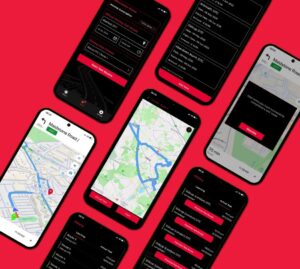
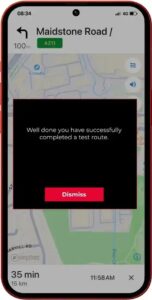
Modern learners rely heavily on digital guidance to support driving lessons. Platforms offering unofficial route insights, navigation aids and local practice suggestions help learners prepare more efficiently. These digital tools are especially useful for identifying challenging junctions or roundabout layouts that repeatedly appear in dvsa driving test routes.
Digital maps, route videos and community-supported tools also allow learners to revisit their practice areas at home, reinforcing the skills they built during lessons. Many platforms now allow users to download driving test routes for free, providing a helpful starting point for structured training. When used alongside professional driving instruction, these resources offer a balanced and realistic understanding of test expectations.
Common Mistakes Learners Can Avoid Through Route Awareness
Even skilled learners can make avoidable mistakes without structured practice. Awareness of route patterns helps prevent these issues.
Common errors include:
- Misjudging gaps at busy roundabouts
- Incorrect road positioning on narrow streets
- Hesitation at emerging junctions
- Speed inconsistencies on variable-limit roads
- Failing to check blind spots when moving off
- Incorrect lane selection before complex turns
Route-focused practice helps learners anticipate where these challenges are likely to occur. With repeated exposure, they develop smoother control, quicker reactions and safer judgement.
Tips for Making the Most of Route-Based Practice
To maximise the benefits of route guidance, learners can follow a simple structure:
| Area of Practice | What to Focus On |
| Complex junctions | Observation, safe judgement, lane accuracy |
| Residential roads | Clearance, speed control, anticipation |
| Manoeuvres | Steady control, positioning, spatial judgement |
| Higher-speed roads | Acceleration, merging, maintaining safe gaps |
| Independent driving | Sat-nav following, sign reading, forward planning |
This structured approach makes lessons more productive and gives the learner a clear understanding of progress.
Conclusion
Route awareness gives learners the clarity and confidence needed to face their driving test with a steady mindset. Understanding the types of roads, the level of complexity and the skill expectations involved makes preparation more purposeful and less stressful. With digital tools, well-planned practice sessions and the right guidance, every learner can approach their test with certainty rather than guesswork. Companies like Test Routes continue to support this journey by offering insights that help learners practise with structure and confidence.