
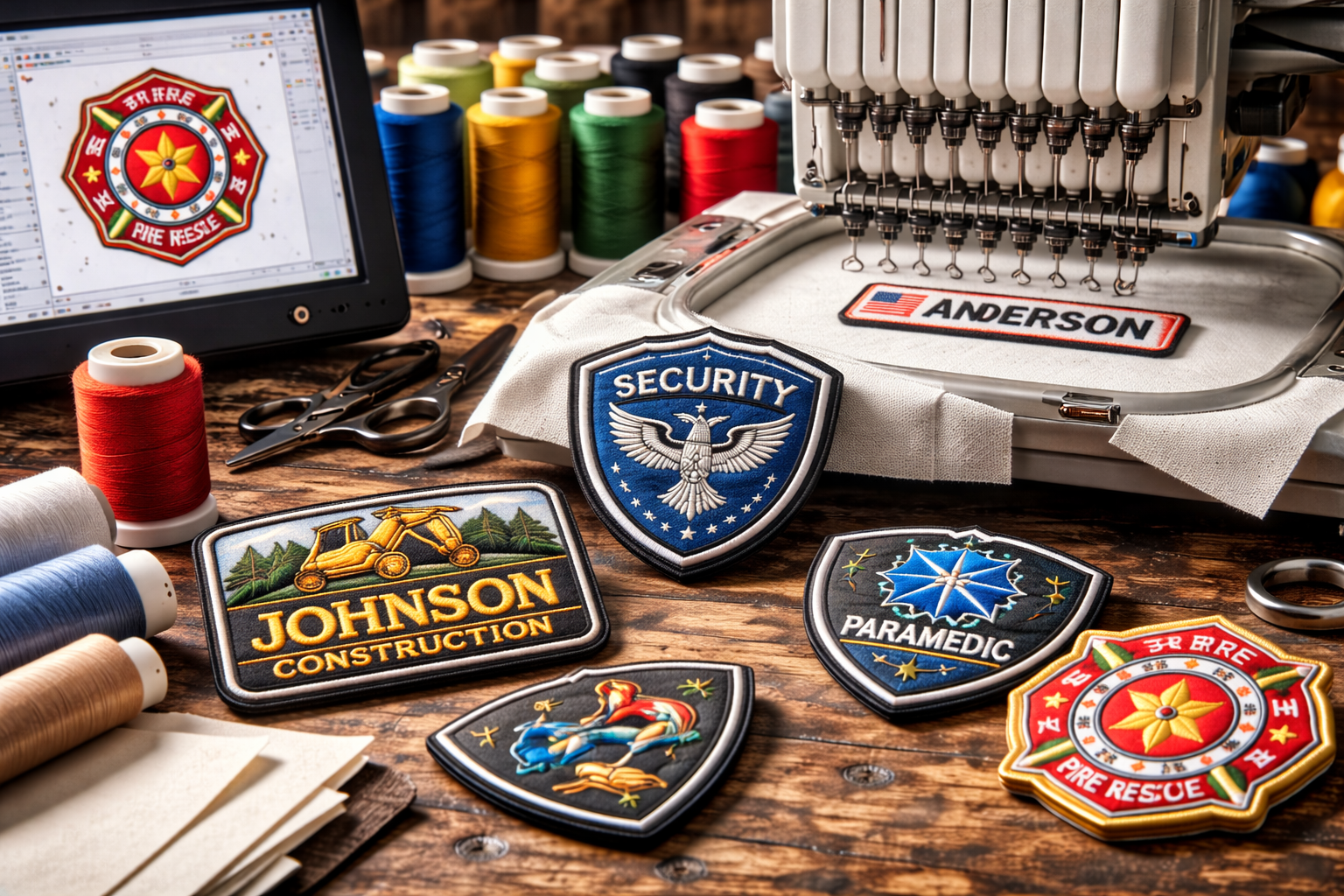
How Custom Embroidered Patches USA Are Produced
Custom embroidered patches are widely used across the USA for uniforms, workwear, teams, and everyday clothing. Even though patches appear simple, their production follows a clear and careful process. Each step helps make sure the patch looks clean, stays strong, and fits its intended use.
This guide explains how custom embroidered patches USA are produced, step by step. It focuses on design preparation, materials, stitching, backing, and finishing, using simple and easy wording for clear understanding.
What is the first step in producing embroidered patches?
The process always begins with the design. A patch needs a clear design that can be converted into stitches.
Details usually reviewed at this stage
-
Logo or artwork file
-
Patch size and shape
-
Number of colors
-
Where the patch will be used
-
Fabric type of the clothing
Designs with very small text or thin lines may be adjusted slightly so they stitch clearly.
How is the design prepared for embroidery?
Before stitching begins, the design is prepared so embroidery machines can follow it. This step is often called digitizing.
What happens during design preparation?
-
Artwork is converted into stitch paths
-
Stitch direction is planned
-
Thread density is adjusted
-
Borders and edges are defined
This step helps the final patch look neat and balanced, especially after repeated washing.
What materials are used to make custom embroidered patches?
Material choice affects how long the patch lasts and how it feels.
Common materials used
-
Twill fabric as the base
-
Polyester or rayon embroidery threads
-
Backing materials for attachment
-
Border threads for edge finishing
Twill fabric is commonly used because it holds stitches well and keeps the patch shape stable.
How does the embroidery process work?
Once the design is ready, the embroidery process begins. Machines stitch the design directly onto the fabric base.
Key parts of the embroidery stage
-
Fabric base is secured in the machine
-
Threads are stitched layer by layer
-
Color changes follow the design plan
-
Stitch tension is monitored
Dense stitching helps the patch keep its form during regular use.
How are patch borders finished?
Borders protect the edges of the patch and prevent fraying.
Common border types
-
Merrowed border for simple shapes
-
Heat cut border for custom shapes
A merrowed border is thicker and rounded, while a heat cut border allows more detailed shapes with clean edges.
How is backing added to embroidered patches?
Backing determines how the patch will attach to clothing.
Common backing options
-
Sew on backing
-
Iron on backing
-
Velcro backing
-
Peel and stick backing
For long term use, sew on backing is often preferred. Velcro backing works well when patches need to be changed.
How are sizes chosen for custom embroidered patches?
Patch size affects readability and comfort.
General sizing guidance
-
Name patches are narrow and clear
-
Logo patches are medium sized
-
Sleeve patches are compact
-
Back patches are larger with simple designs
Size is chosen based on where the patch will be placed.
Table: Production steps and their purpose
| Production Step | What Happens | Why It Matters |
|---|---|---|
| Design review | Artwork and size confirmed | Avoids design issues |
| Digitizing | Stitch paths are created | Improves clarity |
| Embroidery | Threads stitched on fabric | Forms the patch |
| Border finishing | Edges secured | Prevents fraying |
| Backing added | Attachment layer applied | Improves hold |
| Final inspection | Patch quality checked | Avoids defects |
How are quality checks done before patches are finished?
Quality checks help make sure patches meet basic standards.
Common quality checks include
-
Clean and even stitching
-
Secure borders
-
Correct size and shape
-
Proper backing attachment
-
No loose threads
These checks help patches stay neat during real use.
How should embroidered patches be handled after production?
Proper handling helps maintain patch quality before use.
Simple handling tips
-
Store patches flat
-
Keep them dry
-
Avoid bending the edges
-
Apply backing as recommended
Good handling supports long term performance.
FAQs
How long does it take to produce custom embroidered patches USA?
Production time depends on design complexity and order size. Larger orders usually take longer.
Can embroidered patches handle frequent washing?
Yes. When stitched well and attached properly, embroidered patches handle regular washing.
What patch type is best for bold logos?
Embroidered patches work best for bold logos and clear text.
Can patches be made in custom shapes?
Yes. Heat cut borders allow detailed custom shapes.
Are embroidered patches suitable for work uniforms?
Yes. They are commonly used on workwear due to their strength.
Conclusion
Custom embroidered patches USA are produced through a structured process that focuses on clarity, durability, and proper attachment. From design preparation to stitching, borders, backing, and quality checks, each step supports long term use. By understanding how these patches are made, it becomes easier to choose the right design and application for uniforms, workwear, and everyday clothing.