How Quick Commerce Is Reshaping Food Brand Distribution In India
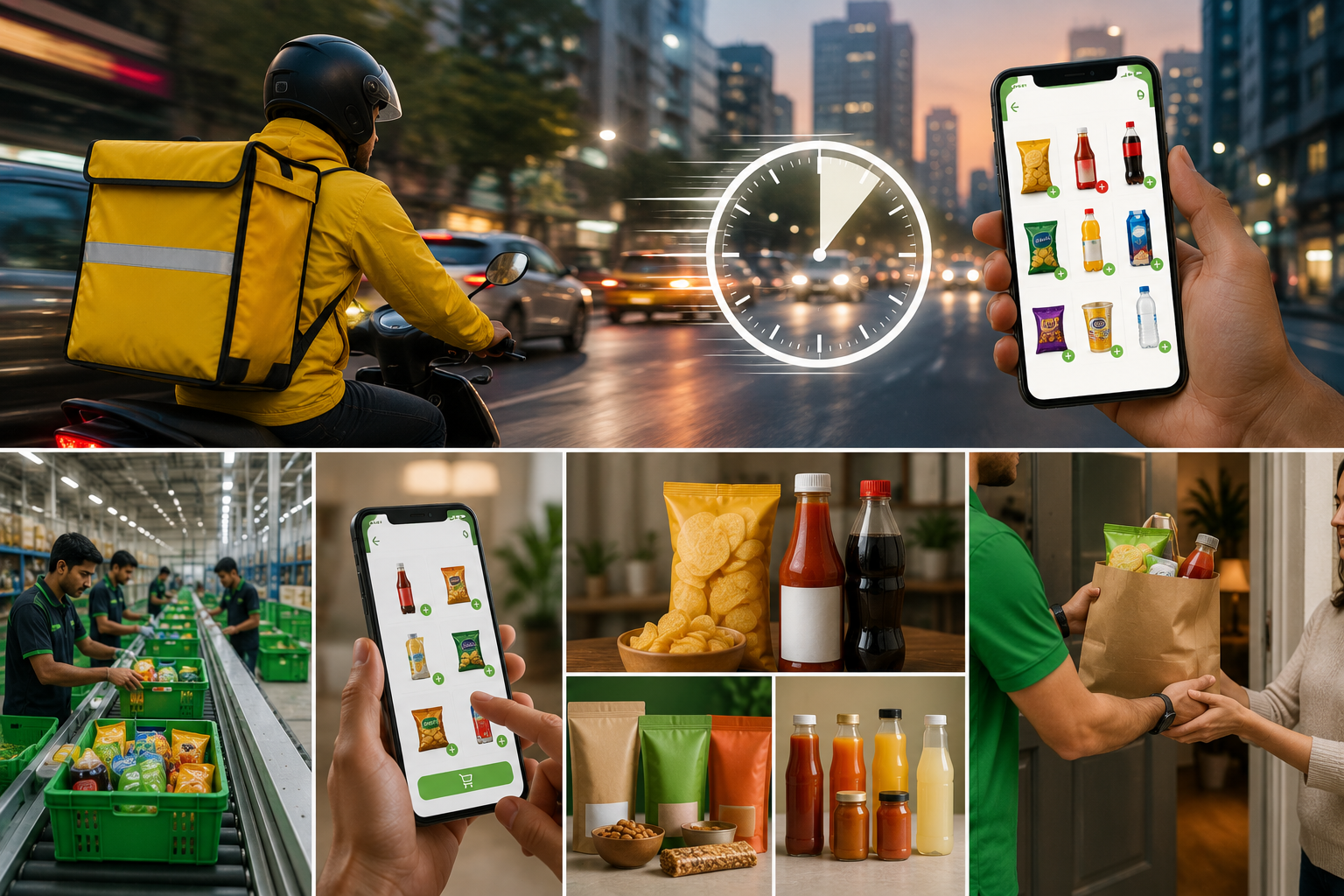
Ten minutes. That's roughly how long it now takes for a packet of chips or a bottle of ketchup to reach someone's door in a major Indian city, and that single number has quietly rewritten how food brands think about distribution.
How Fast Quick Commerce Has Grown
Quick commerce has gone from a curiosity to a serious distribution channel in a short space of time. It now accounts for 70 to 75 percent of total e-grocery orders in India, up from around 35 percent just a few years ago, and has delivered some FMCG companies a 50 to 100 percent sales increase in specific categories. Even now, quick commerce is believed to be tapping only a small fraction of its potential market, which explains why brands continue investing heavily in the channel despite slower growth elsewhere.
Why This Matters For Food Brands Specifically
Food and beverage products behave differently in quick commerce than in traditional retail. Pack sizes that work for a weekly grocery run don't always work for an impulse ten-minute order. Shelf placement logic shifts when there's no physical shelf, just an app interface deciding what shows up first. Brands that built their distribution strategy entirely around general trade and modern retail are having to rethink packaging, pricing, and even portion sizes for a channel that didn't really exist five years ago in its current form.
The Categories Seeing The Biggest Shift
Snacking and beverages have been particularly responsive to this channel. Snacking demand grew at close to 6 percent in late 2025, and soft drinks saw growth closer to 19 percent in the same period, categories that lend themselves naturally to impulse, small-basket ordering rather than planned bulk purchases.
What This Means For Smaller Brands
Quick commerce platforms have, in some ways, levelled the playing field for smaller and regional food brands that struggled to get shelf space in large modern retail chains. Listing on a quick commerce app doesn't require the same negotiating leverage as securing prime shelf space at a supermarket. That said, visibility within the app is its own competitive game, and brands without a deliberate strategy for it tend to get buried under bigger competitors with bigger ad budgets on the platform itself.