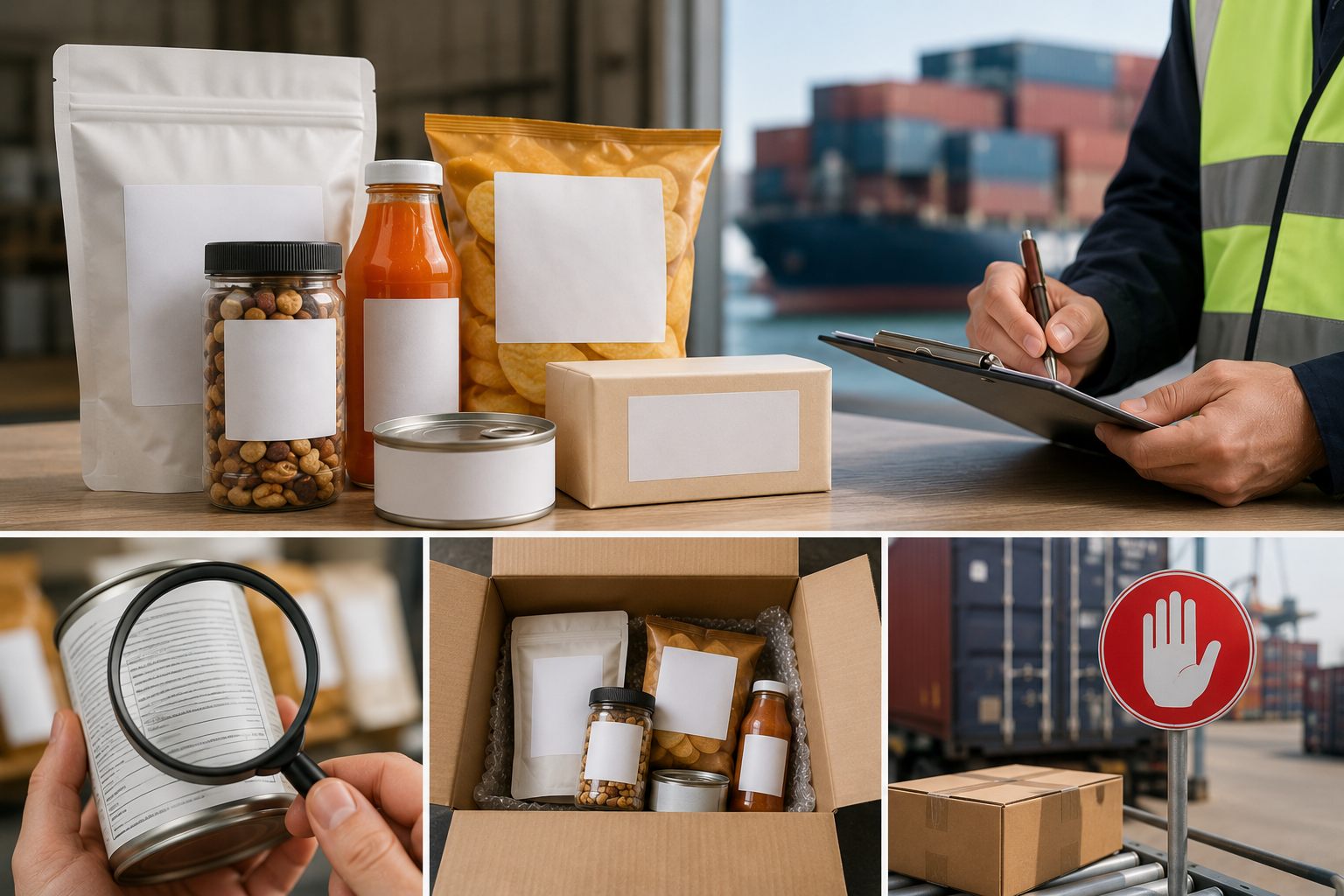
UK Food Labelling Requirements 2026: Address Rules, Allergens And Common Export Mistakes
Most rejected shipments at UK ports don't get stopped because of what's in the product. They get stopped because of what's missing on the label, an address, an allergen declaration, a unit of measurement in the wrong format. The product itself is usually fine. The label is what trips people up.
What UK Food Labelling Actually Requires
Any pre-packaged food sold in the UK has to carry a defined set of information under the Food Information Regulations: the name of the food, a full ingredients list in descending order of weight, allergen information, net quantity, a durability date, storage conditions where relevant, and the name and address of the food business operator or importer responsible for the product. All of it has to be in English and presented clearly enough to be easily read by consumers.
The UK Address Requirement Exporters Often Miss
Since Brexit, products sold in Great Britain need a UK address on the label, either the food business operator's own UK address or the address of a UK-based importer. A label that only carries the exporter's address back in India doesn't meet this requirement, and it's one of the more common reasons shipments get flagged on arrival. If you're working through a UK importer or distributor, their address typically covers this requirement, but it has to actually be printed on the label, not just held on file somewhere.
Allergen Labelling Rules
The UK requires 14 major allergens to be clearly identifiable within the ingredients list, usually through bold, italic, or otherwise emphasised formatting, things like peanuts, tree nuts, milk, eggs, soya, gluten-containing cereals, and shellfish among others. Precautionary "may contain" statements are common but are meant to reflect a genuine cross-contamination risk, not used as a blanket liability shield across an entire product range.
What's Changing Under The New UK-EU Agreement?
In March 2026, the UK government set out further details of a new Sanitary and Phytosanitary agreement with the EU, expected to take effect by mid-2027. The detail that matters most for labelling is that the UK intends to dynamically align with EU food law going forward, covering food information, nutrition and health claims, and marketing standards, not just for goods trading with the EU but potentially for the UK market as a whole. Detailed sector-specific guidance is due from DEFRA starting in May 2026, with fuller findings expected through summer 2026.
For now, exporters should treat the current rules as the standard and keep an eye on future guidance, since some requirements could change over the next couple of years.
Common Mistakes That Get Shipments Flagged
Beyond the missing UK address, the most frequent issues are inconsistent allergen formatting between the ingredients list and any allergen summary box, net quantity declared in the wrong unit format, and durability dates that don't match the format UK retailers expect. Most of these mistakes are fairly easy to correct. The problem is that many exporters simply reuse labels designed for another market and make only minor changes before shipping to the UK, which is where small compliance issues start showing up.