What Does a Food Manufacturing Consultant Actually Do?
"Food manufacturing consultant" gets used as a catch-all term, which is part of the problem. Someone searching for help with a single piece of equipment and someone planning a full factory build from scratch both end up typing roughly the same search, even though the engagements they actually need look nothing alike.
The Core Scope Of Food Manufacturing Consulting
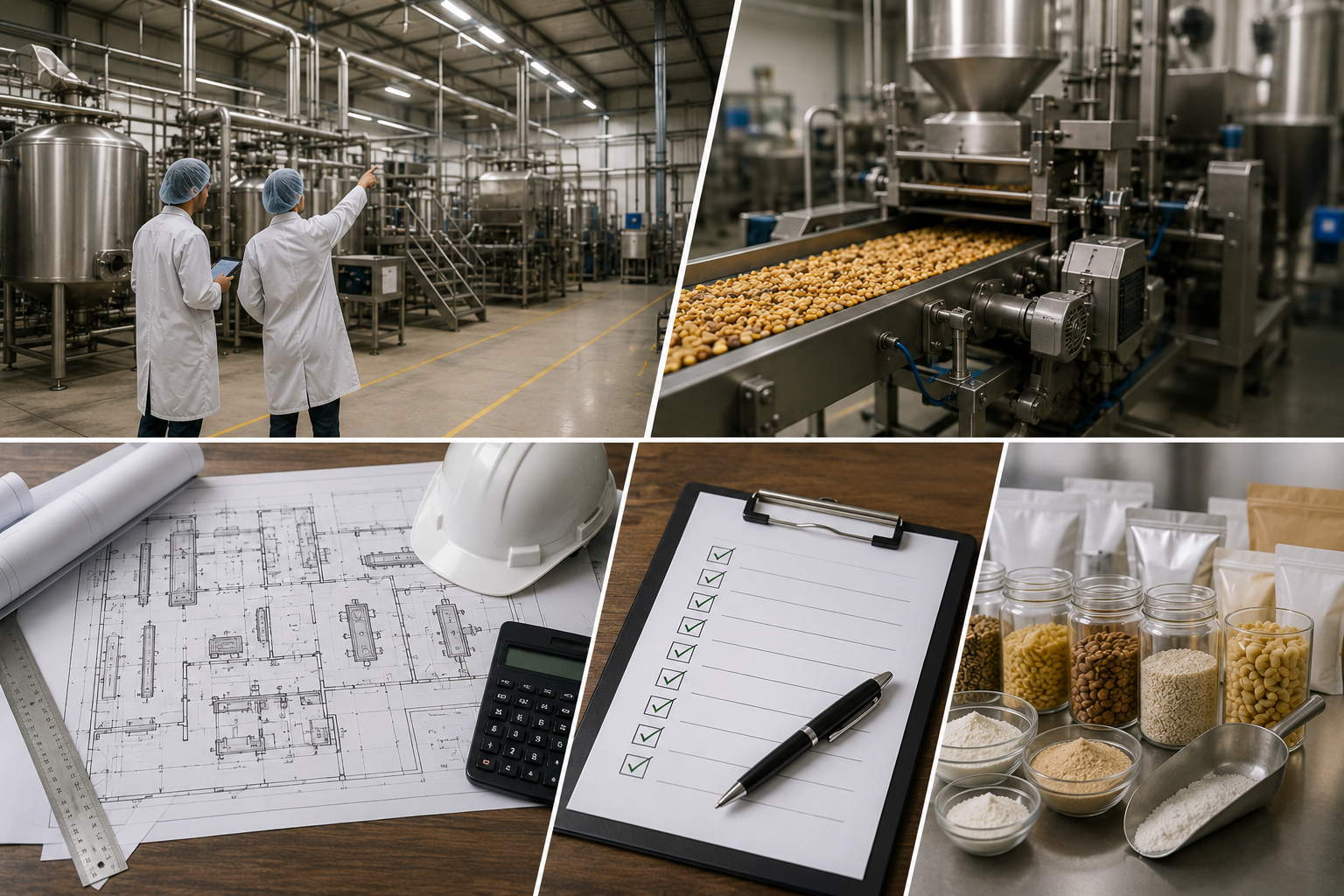
At its core, a food processing consultant helps bridge the gap between a product formulation and the physical, regulatory, and operational requirements of producing it at scale. This includes equipment selection, facility layout, production capacity planning, and ensuring the physical plant meets food safety certification requirements like HACCP and FSSAI facility standards.
Food Factory Design And Setup Consultation
This is the broader end of the work, and it usually covers site and layout planning to optimise workflow and minimise contamination risk, equipment specification matched to actual production volume rather than guesswork, utility planning for water, power, and waste management, and phased setup planning for businesses scaling production over time instead of building maximum capacity on day one.
When Does A Business Need A Food Manufacturing Consultant?
There are really two situations where this comes up. The first is a brand moving from a shared or contract manufacturing facility into its own plant for the first time, where almost every decision is being made from scratch. The second is an existing facility that needs to expand or modify its line to handle a new product category, where the constraint isn't starting from zero, it's working around equipment and infrastructure that's already in place.
Both situations involve decisions that are expensive to reverse once equipment is purchased and installed, which is exactly why getting the layout and equipment specification right matters more here than in almost any other part of running a food business.
How Long Does A Food Factory Setup Consultation Take?
This depends heavily on facility size, but initial layout and equipment planning often takes four to eight weeks. The full setup process, including procurement and installation, typically extends several months beyond that. Costs follow a similar pattern, ranging from a focused equipment and layout consultation for a small unit to a much larger engineering engagement for a full-scale facility, usually structured either as a fixed project fee for defined deliverables or a phased retainer for businesses building out a facility over several months.