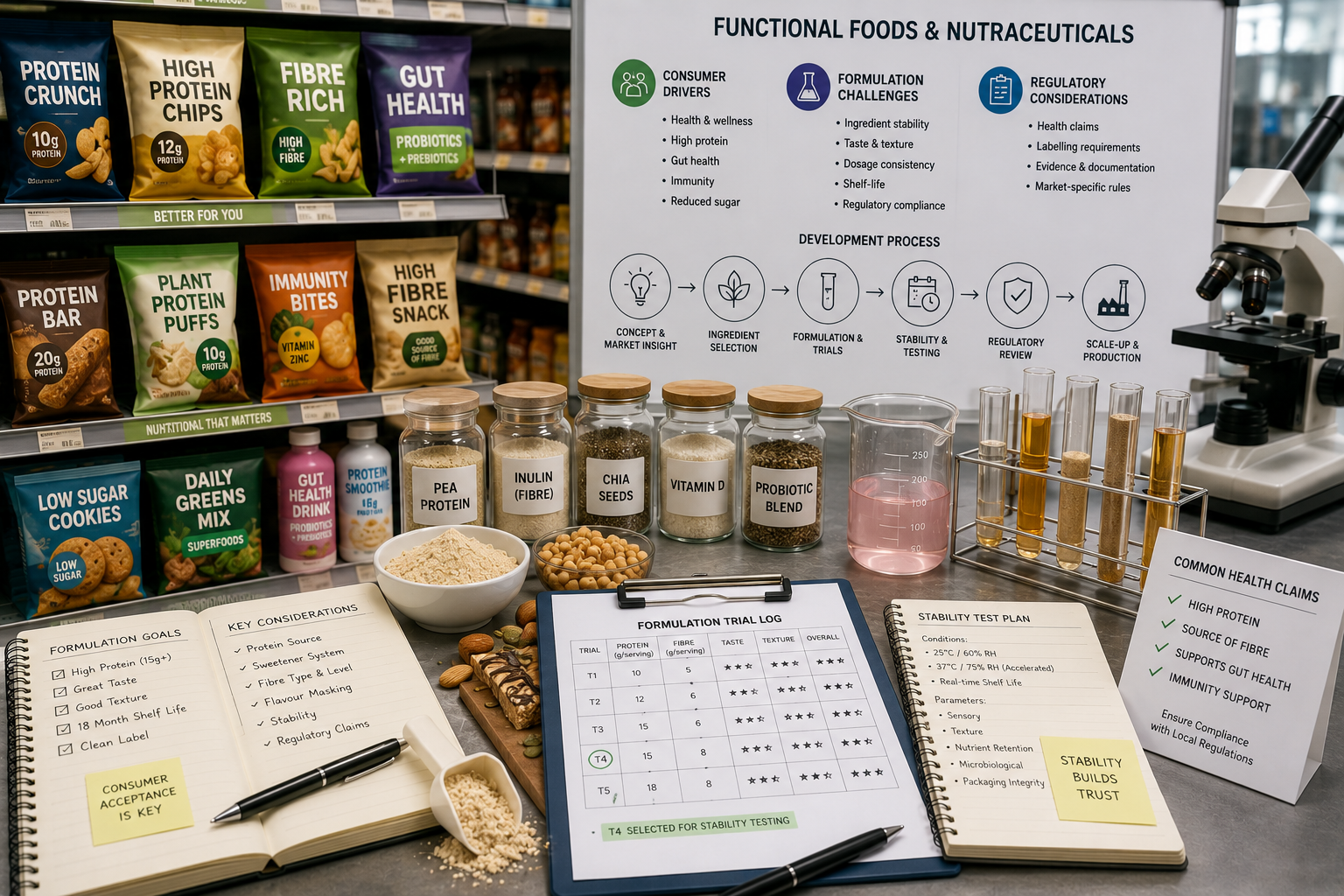
Functional Foods and Nutraceuticals Why This Category Is Growing
Walk down a snack aisle today and count how many packets mention protein, fibre, or "gut health" somewhere on the front of pack. A few years ago that shelf looked completely different. Functional foods and nutraceuticals have moved from a niche health-food corner into mainstream grocery shelves, and the formulation work behind that shift is genuinely different from standard food development, not just a marketing label slapped onto an old recipe.
Functional foods are conventional foods with an added health benefit — a fortified snack, a probiotic drink, a high-protein bar. Nutraceuticals sit closer to supplements, usually in capsule or powder form, with stricter dosage and regulatory requirements. The line between the two is decided more by regulatory classification than by what's actually in the ingredient list.
Why Functional Foods And Nutraceuticals Are Growing
Consumer demand has shifted toward products that do more than taste good: added protein, gut health support, immunity ingredients, or reduced sugar without losing texture. This has pushed both established FMCG brands and smaller startups into the functional foods space, often without fully accounting for how different this formulation work is from a standard product launch.
What Makes Functional Food Formulation Different
- Active ingredients often carry their own stability requirements.
- Packaging claims such as "high protein" or "immunity support" have specific regulatory thresholds.
- Taste and texture frequently change when functional ingredients are added.
- Dosage consistency becomes more important, especially in nutraceutical products.
That third point is where most projects actually get stuck. Adding 15 grams of protein to a bar is the easy part. Keeping it from turning chalky or dry, while still hitting an 18-month shelf life, is where most of the formulation budget actually goes.
Reformulation Is Bigger Than New Product Development Right Now
A significant share of functional food work right now involves reformulating existing snack products rather than building new ones from scratch — reducing sugar, adding protein, or removing a specific allergen while keeping the product recognisably similar to what customers already buy. This reformulation work is often more technically demanding than new development, since the target is matching an existing taste profile under new constraints rather than starting from a blank page.
Are Health Claims On Packaging Regulated?
Yes, and more closely than standard food labelling. A product claiming a health benefit typically needs supporting evidence and compliant labelling language. This is also where the line between a functional food and a nutraceutical product often gets settled, regulatory classification ends up mattering more than how the product is marketed on shelf.