Carbonated Beverage Formulation: What the Development Process Actually Involves
A founder once described the moment her team's new fizzy drink passed every flat-taste test, only to come back from the carbonation line tasting noticeably sweeter and slightly metallic. Nothing in the recipe had changed. What changed was the CO2, and it took another three weeks of adjustment to get the carbonated version to match what the flat sample had promised.
This is the part of beverage formulation that catches most first-time brand owners off guard. Carbonated beverage formulation looks simple from the outside: sugar, flavour, water, bubbles. The actual development process involves enough technical variables that most brands underestimate both the timeline and the number of trial batches required before a formula is genuinely ready for production.
What Beverage Formulation Actually Involves
A beverage development consultant works through flavour profiling, sweetness balance, acidity for taste and preservation, and ingredient stability under carbonation. CO2 changes how flavour compounds are perceived on the palate. A flavour that tastes right flat often tastes different once carbonated, which is exactly what happened in the story above, and it almost always means another round of adjustment.
The Stages, In The Order They Actually Happen
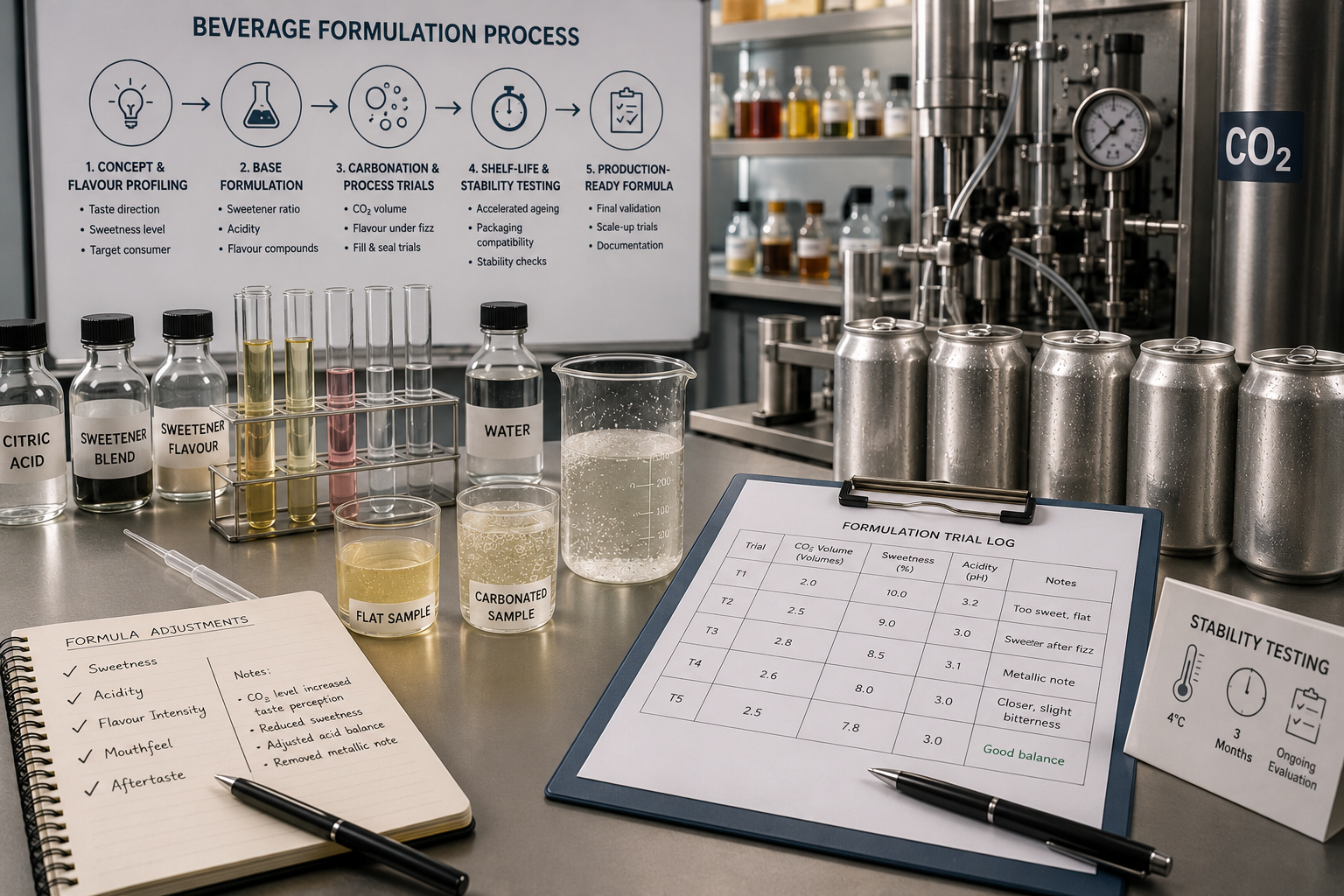
- Concept and flavour profiling — defining the taste direction, sweetness level, and who the drink is actually for, before any lab work starts.
- Base formulation — getting the sugar or sweetener ratio, acidity, and flavour compounds right in a flat, uncarbonated sample.
- Carbonation and process trials — testing CO2 volume and how the flavour holds up once it's actually fizzy, plus fill and seal trials.
- Shelf-life and stability testing — accelerated ageing and packaging compatibility checks, usually the longest stage by far.
Most brands assume the bulk of the timeline sits in stage one or two, getting the taste right. In practice, stage four eats up the most calendar time, simply because you can't rush how a product behaves over weeks of shelf life without actually waiting those weeks out, or paying for accelerated testing that simulates it.
Why Carbonation Adds So Much Complexity
CO2 volume affects mouthfeel, shelf stability, and packaging requirements all at once. Acidity has to balance taste against preservation and how well the carbonation holds. Packaging materials need to hold pressure without affecting flavour over the product's full shelf life. And production-scale carbonation behaves differently than small-batch trials, which is why a formula validated on bench equipment still needs scale-up testing before it goes into a real fill line.
The Most Common Beverage Formulation Mistake
The most frequent issue isn't a bad recipe, it's finalising a flavour at bench scale without accounting for how carbonation, packaging, and shelf time will change it. A formula that tastes correct on day one can shift noticeably by month three if stability testing wasn't built into the original development timeline. Brands that skip this step often find out the hard way, after a few hundred units are already in market.
How Long Does Beverage Formulation Actually Take?
A single beverage formulation project, from concept to a production-ready formula, typically takes 8 to 14 weeks depending on complexity. Functional or fortified beverages, anything with added vitamins, protein, or active ingredients, usually add extra weeks because those ingredients introduce their own stability and interaction questions on top of the base formulation work.