
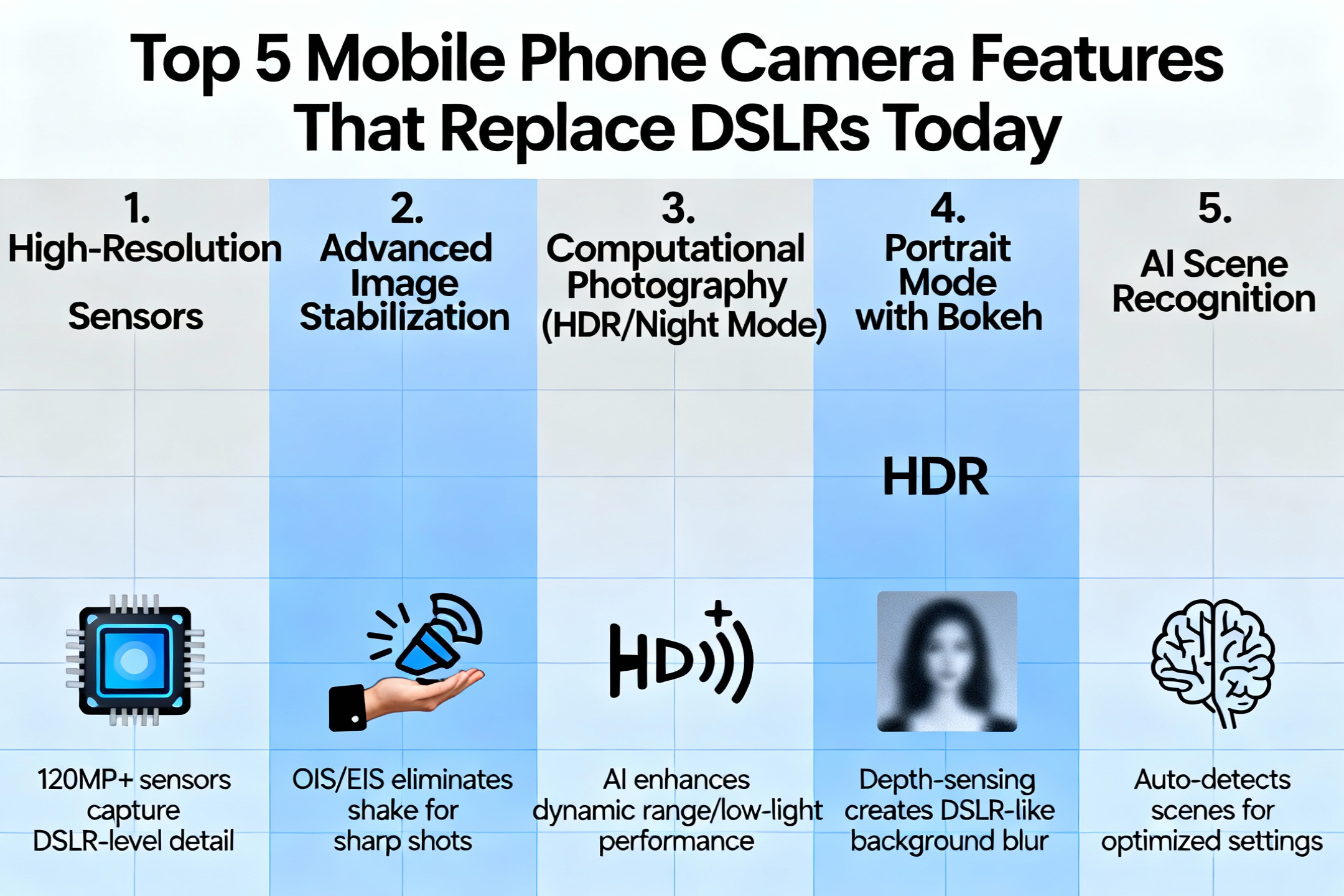
Top 5 Mobile Phone Camera Features That Replace DSLRs Today
For decades, digital single-lens reflex (DSLR) cameras were the gold standard for serious photography. They offered large sensors, interchangeable lenses, and manual controls that smartphones simply could not match. But over the last several years, mobile phone cameras have evolved at an extraordinary pace. Advances in hardware, software, and computational photography have closed much of the gap between smartphones and traditional cameras.
This doesn’t mean DSLRs are obsolete in every situation. Professional photography, sports shooting, and specialized work still benefit from dedicated camera systems. However, for everyday photography—and even many creative applications—modern smartphones now deliver results that were once only possible with bulky gear.
Below are five mobile phone camera features that explain why smartphones can now replace DSLRs for many users.
1. Computational Photography and AI Image Processing
One of the most significant advantages smartphones have over DSLRs is computational photography. Rather than relying on a single exposure, modern phones capture multiple images simultaneously and combine them using advanced algorithms.
How Computational Photography Works
When you press the shutter on a smartphone, the camera often:
- Captures multiple frames at different exposures
- Analyzes lighting, motion, and focus in real time
- Merges images to reduce noise and improve detail
- Adjusts color, contrast, and sharpness automatically
This process happens almost instantly, producing a final image that often looks more polished than a single-shot DSLR photo without post-processing.
Why It Rivals DSLRs
DSLRs still capture excellent raw data, but they often require manual editing to achieve optimal results. Smartphones, on the other hand, do much of this work automatically. For casual photographers or those who prefer minimal editing, this feature alone can replace the need for a traditional camera.
2. Advanced Low-Light and Night Photography
Low-light photography was once a clear weakness of smartphones. Small sensors struggled with noise, blur, and loss of detail. Today, night photography is one of the strongest examples of how far mobile cameras have come.
Night Mode Explained
Modern smartphones use techniques such as:
- Long exposure stacking
- Motion detection to reduce blur
- AI-based noise reduction
- Brightness and color correction
Instead of one long exposure, phones capture multiple short exposures and combine them to create a sharp, bright image—even in near darkness.
Practical Impact
In many everyday situations—city streets at night, indoor events, or evening landscapes—smartphones can now outperform entry-level DSLRs used without a tripod. This capability has made smartphones the primary camera for millions of people.
As camera technology improves, older devices lose relevance faster. This is one reason some users choose to sell old phone online when upgrading to a model with better low-light performance.
3. Multi-Lens Systems and Optical Versatility
Another major shift in mobile photography is the widespread use of multi-lens camera systems. Instead of relying on a single lens, smartphones now include multiple specialized lenses built into one device.
Common Lens Types on Smartphones
Most modern phones include combinations of:
- Wide-angle lenses for everyday shots
- Ultra-wide lenses for landscapes and architecture
- Telephoto lenses for optical zoom
- Macro lenses for close-up photography
These lenses allow users to switch perspectives instantly, without changing physical equipment.
Comparing to DSLRs
DSLRs achieve versatility through interchangeable lenses, which offer higher optical quality but require planning, expense, and physical storage. Smartphones trade some optical precision for convenience, offering instant access to multiple focal lengths in a pocket-sized device.
For travel, social media content, and spontaneous photography, this flexibility often outweighs the advantages of traditional lens systems.
4. Portrait Mode and Computational Depth Effects
Portrait photography has long been associated with DSLRs because of their ability to create shallow depth of field—blurring the background while keeping the subject sharp. Smartphones now achieve similar results using computational techniques.
How Portrait Mode Works
Smartphones simulate depth of field by:
- Using multiple lenses or sensors to map depth
- Identifying subjects with AI (faces, people, objects)
- Applying background blur selectively
- Allowing adjustment of blur intensity after capture
Unlike DSLRs, where depth of field is determined at the moment of shooting, smartphones often allow edits after the photo is taken.
Strengths and Limitations
While smartphone portrait mode may struggle with complex edges (like hair or transparent objects), the results are impressive for everyday use. For casual portraits, social media, and video calls, the difference between smartphone and DSLR output is increasingly subtle.
5. Professional-Level Video Capabilities
Video recording is another area where smartphones have made remarkable progress. Many modern phones now support video features that were once limited to professional cameras.
Key Video Features in Smartphones
- 4K and even 8K video recording
- Optical and electronic image stabilization
- Cinematic focus tracking
- High dynamic range (HDR) video
- Log or flat color profiles for editing
Some smartphones can switch lenses while recording, maintain stable footage while walking, and adapt exposure dynamically—features that often require additional equipment on DSLRs.
Why Smartphones Excel at Video
Smartphones integrate hardware and software tightly. This allows for real-time stabilization, autofocus tracking, and exposure adjustments that are difficult to match with traditional cameras without accessories.
For content creators, students, and everyday users, smartphones now offer a complete video solution without the learning curve or cost of dedicated gear.
The Role of Editing and Sharing Ecosystems
Another reason smartphones rival DSLRs is what happens after the photo is taken. Editing, storage, and sharing are seamlessly integrated into mobile platforms.
Built-In Editing Tools
Most smartphones include advanced editing tools that allow users to:
- Adjust exposure, contrast, and color
- Crop and straighten images
- Apply filters or presets
- Edit portraits and videos directly
While DSLRs still benefit from professional editing software, smartphones make high-quality editing accessible to everyone.
Instant Sharing and Backup
Photos taken on smartphones are often backed up automatically and ready to share within seconds. This convenience plays a major role in why smartphones have become the default camera for daily life.
As people upgrade to phones with better cameras, older devices are often set aside. Instead of leaving them unused, many choose to sell old phone online, extending the device’s life and reducing electronic waste.
Where DSLRs Still Have the Advantage
Despite these advances, it’s important to recognize the limits of smartphone cameras.
DSLR Strengths
- Larger sensors for extreme low-light situations
- Superior optical zoom for wildlife or sports
- Greater manual control for professional workflows
- Interchangeable lenses with specialized purposes
For professional photographers and specialized use cases, DSLRs and mirrorless cameras remain essential tools.
However, these situations represent a smaller portion of everyday photography needs.
How Smartphone Cameras Changed Photography Habits
The rise of smartphone photography has reshaped how people document their lives. Cameras are now always available, easy to use, and powerful enough for most situations.
This shift has reduced the need for separate cameras for many users. As smartphone cameras improve, the upgrade cycle shortens—not because phones stop working, but because newer models offer noticeably better creative tools.
Understanding these trends helps users make informed decisions about when to upgrade and what to do with older devices.
Final Thoughts
Modern smartphone cameras have reached a level where they can replace DSLRs for many everyday and creative uses. Computational photography, advanced low-light performance, multi-lens systems, portrait modes, and professional-grade video features have transformed phones into powerful imaging tools.
While DSLRs still dominate specialized photography, smartphones now offer a balance of quality, convenience, and accessibility that suits the needs of most people. As camera technology continues to advance, smartphones will likely play an even larger role in shaping how images and videos are captured.
Whether you’re a casual photographer or someone who enjoys documenting daily life, understanding these camera features can help you appreciate how far mobile photography has come—and why the device in your pocket is often more capable than it appears.