
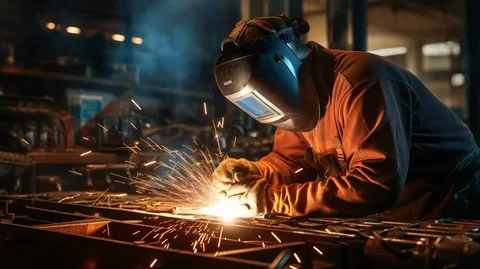
Sheet Metal Welding Techniques for Clean and Smooth Finishes
Achieving clean and smooth finishes is one of the most critical goals in modern metal fabrication. Whether the final product is used in automotive manufacturing, construction, aerospace, or consumer goods, the visual quality and structural integrity of welded joints directly affect performance and customer satisfaction. Sheet metal welding requires a precise balance of skill, technique, and equipment to avoid defects such as warping, spatter, burn-through, or uneven seams. Because sheet metal is thinner and more delicate than heavy metal components, welding it successfully demands specialized methods and a deep understanding of material behavior.
In today’s competitive fabrication industry, clean welds are no longer optional—they are an expectation. Smooth finishes reduce the need for extensive post-weld grinding, save production time, and enhance corrosion resistance and durability. This article explores the most effective sheet metal welding techniques that help fabricators achieve professional-grade results. From preparation and process selection to heat control and finishing strategies, these techniques are essential for producing welds that are both strong and visually flawless.
Importance of Proper Preparation in Sheet Metal Welding
Preparation is the foundation of successful sheet metal welding, especially when the goal is a clean and smooth finish. Before any welding begins, the metal surface must be thoroughly cleaned to remove contaminants such as oil, grease, rust, paint, or mill scale. These impurities can cause porosity, uneven bead formation, and weak joints. In sheet metal welding, even minor surface contamination can result in visible defects due to the thin nature of the material. Using solvents, wire brushes, or abrasive pads ensures the welding area is free from anything that could interfere with proper fusion.
Equally important is proper joint design and fit-up. Tight, consistent gaps between sheet metal pieces help maintain uniform heat distribution and prevent burn-through. Clamps, jigs, or fixtures are often used to hold the sheets firmly in place during welding, minimizing distortion and misalignment. Edge preparation, such as beveling or smoothing sharp edges, also plays a key role in achieving a neat weld bead. When preparation is done correctly, sheet metal welding becomes more controlled, resulting in smoother seams and a higher-quality finished product.
TIG Welding Techniques for Smooth and Precise Finishes
TIG (Tungsten Inert Gas) welding is widely regarded as one of the best techniques for achieving clean and smooth finishes in sheet metal welding. This process uses a non-consumable tungsten electrode and a shielding gas, typically argon, to produce precise and controlled welds. TIG welding allows the welder to adjust heat input with exceptional accuracy, which is crucial when working with thin sheet metal. The ability to add filler metal manually also gives greater control over bead shape and appearance, resulting in aesthetically pleasing welds.
One of the biggest advantages of TIG welding in sheet metal welding is its minimal spatter and clean arc. Because the process generates less smoke and slag compared to other welding methods, the finished weld often requires little to no post-weld cleanup. However, TIG welding does require a higher level of skill and patience, as it is generally slower than other techniques. When performed correctly, TIG welding produces smooth, uniform beads that blend seamlessly with the base metal, making it ideal for applications where appearance and precision are critical.
MIG Welding Methods for Consistent and Clean Welds
MIG (Metal Inert Gas) welding is another popular method in sheet metal welding, particularly in high-production environments. This process uses a continuously fed wire electrode and shielding gas to create strong, consistent welds. While MIG welding is often associated with thicker materials, it can be highly effective for sheet metal welding when proper settings and techniques are used. Selecting the correct wire diameter, voltage, and wire feed speed is essential to prevent burn-through and excessive spatter.
To achieve clean and smooth finishes with MIG welding, welders often use techniques such as stitch welding or pulse welding. Stitch welding involves making short, intermittent welds rather than a continuous bead, which helps control heat input and reduce warping. Pulse MIG welding alternates between high and low current levels, allowing better control over the weld pool. When applied correctly, these methods improve bead appearance and reduce post-weld finishing work. MIG welding’s speed and efficiency make it a practical choice for sheet metal welding projects that require both quality and productivity.
Heat Control and Distortion Management in Sheet Metal Welding
Heat control is one of the most challenging aspects of sheet metal welding, as excessive heat can easily warp thin metal sheets. Distortion not only affects the appearance of the final product but can also compromise dimensional accuracy and structural integrity. Effective heat management begins with selecting the right welding parameters, including lower amperage, shorter arc lengths, and faster travel speeds. These adjustments help limit the amount of heat introduced into the metal, reducing the risk of deformation.
Another proven strategy for minimizing distortion in sheet metal welding is the use of welding sequences and cooling techniques. Alternating weld locations, allowing time for cooling between passes, and using backstepping methods can help distribute heat more evenly across the workpiece. In some cases, heat sinks or copper backing bars are used to absorb excess heat and stabilize the weld area. By mastering heat control, welders can achieve smoother finishes and maintain the original shape of the sheet metal, reducing the need for corrective work.
Post-Weld Finishing Techniques for a Professional Look
Even with excellent welding techniques, post-weld finishing is often necessary to achieve a truly clean and smooth appearance. Grinding and sanding are commonly used to remove minor imperfections, high spots, or discoloration from the weld bead. In sheet metal welding, care must be taken not to over-grind, as this can weaken the joint or thin the metal excessively. Using fine-grit abrasives and gradual pressure helps preserve weld strength while enhancing surface smoothness.
Additional finishing processes such as polishing, brushing, or chemical treatments can further improve the appearance and durability of welded sheet metal. Polishing creates a uniform, reflective surface that is especially desirable in decorative or consumer-facing products. Brushing provides a consistent texture that helps blend the weld with the surrounding metal. In some industries, passivation or coating is applied to protect the weld from corrosion and environmental damage. These post-weld finishing techniques complete the sheet metal welding process, ensuring the final product meets both functional and aesthetic standards.
Conclusion
Clean and smooth finishes are a defining characteristic of high-quality sheet metal welding. Achieving these results requires more than just basic welding skills—it demands careful preparation, the right choice of welding techniques, precise heat control, and thoughtful post-weld finishing. TIG and MIG welding each offer unique advantages for sheet metal welding, and understanding when and how to use them is key to producing professional results.
As industries continue to demand higher standards in metal fabrication, mastering advanced sheet metal welding techniques becomes increasingly important. By focusing on cleanliness, precision, and consistency throughout the welding process, fabricators can reduce rework, improve efficiency, and deliver products that meet both structural and visual expectations. Whether for industrial applications or custom fabrication projects, clean and smooth weld finishes remain a hallmark of excellence in sheet metal welding.