
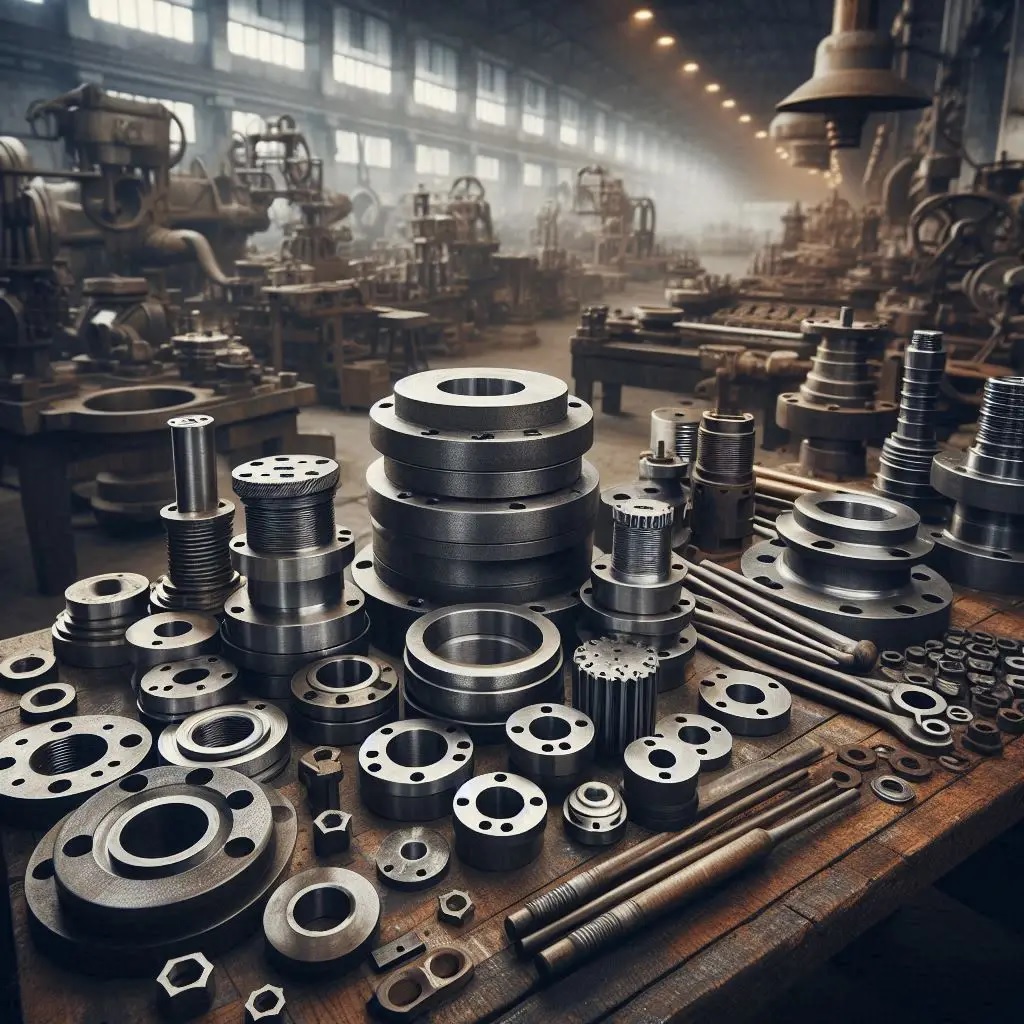
What materials are used for manufacturing forged flanges in India?
India’s manufacturers produce the forged steel flanges from other materials (primarily) based on the customer’s individual application requirements. Manufacturers have engineered these products to operate in various environments and conditions, such as high- and low-pressure systems, extreme heat sensitivity or conditions that experience severe corrosion. Forged flanges manufacturer needs to comply with several industrial standards for ensuring safety, and efficiency. These industrial standards can either be nationwide or international. In India ANSI and ISO certified forged flanges are very common. However, for forged flanges exporters ASTM A182 F304, ASTM A182 F316, or ASTM A182 F321 are essential. There also exist forged ANSI Standard Flanges made from Alloy Steel (example – ASTM 182 F11, F22 and F91) as well as Alloyed Steels.
In very demanding environments, forged flanges India also supply duplex and super duplex stainless steel. They have also developed special alloys, such as Inconel, Monel, and Hastelloy. All materials are selected according to application requirements and have been produced under strict, controlled processing with regard to the quality of the finished products to ensure that the products are strong and durable and meet international standards of quality.
Understanding different industrial standards for manufacturing forged flanges in India
In India, it’s critical to understand the types of industrial standards which govern the making of forged flanges, because they determine how to secure safety, compatibility and reliable operation of piping systems. Most Indian manufacturers will comply with the same International Standards as Americans do for forged flanges, which include ASME B16.5 (Dimensions and Pressure Ratings) and ASME B16.47 (Dimensions and Pressure Ratings). They will also comply with the same ASTM Specifications for the materials used to manufacture the flanges which include A105, A182 and A350 and for any projects where European compliance is required by law. The European nations follow different standards than those of the American manufacturers, such as EN (European Union), DIN (Germany) and BS (British Standards), although they have very similar specifications. All of these standards outline the critical parameters required to produce high quality forged flanges including size tolerance, pressure class, type of facing and test requirements so that forged flanges manufactured in India can be used throughout the world and that customers can have confidence in the quality of the product.
Quality control factors for manufacturing forged flanges in India
To ensure that the flanges manufactured in India have strength, geometry accuracy, and durability over time, quality assurance is performed throughout all stages of the production process. The first step in this process is to choose and verify the quality of the raw materials used to produce a flange. The second step is to forge and heat treat the raw materials under controlled conditions to create flanges with the proper mechanical properties. After that, CNC machining is done with precision to keep very tight tolerances. The final steps in this process are to inspect the flanges using dimensional measurements, ultrasonic testing, magnetic particle inspection, and visual inspections to check for any internal or surface defects. Finally, the forged flanges must be accompanied by Material Test Certificates, Hardness Tests, and must comply with ASTM, ASME, and ISO standards to ensure compliance with both Domestic and International Quality Standards.
Where are forged flanges used in oil and gas industries?
Forged flanges are predominantly utilized in the oil and gas sector throughout upstream, midstream and downstream processes that require strong, leak-tight connections. Applications for forged flanges include connecting pipes (particularly in pipelines), connecting to wellhead equipment, connecting to manifolds, controlling the flow of products (as in valves), attaching pumps to pipes, and creating a means for maintaining pressure within pressure vessels. In addition to their use in the upstream, midstream and downstream parts of the oil and gas industry, forged flanges can also be found in petrochemical plants and other refinery and processing facilities working with extremely high temperature and high pressures when dealing with crude oil, natural gas and other corrosive substances. Because of their superior mechanical strength, resistance to stress, and ability to meet the standards set by various international organizations, forged flanges are unrivalled for numerous oil and gas applications that require both reliability and safety.
Conclusion
It is through careful selection of materials, strict adherence to International Standards and stringent Quality Control system that produce Indian forged flange’s strength and dependability.
The availability of many varieties of carbon steel, stainless steel and different types of alloy steels and special alloys from India, allows manufacturers to provide a variety of forged flanges to meet the demands of the Oil and Gas Industry. The use of globally accepted and thoroughly tested methods of manufacturing provides for the consistent operation of forged flanges in severe conditions of High Pressure and High Temperature, making Indian Forged Flanges the preferred choice for many critical Industrial Applications throughout the world.