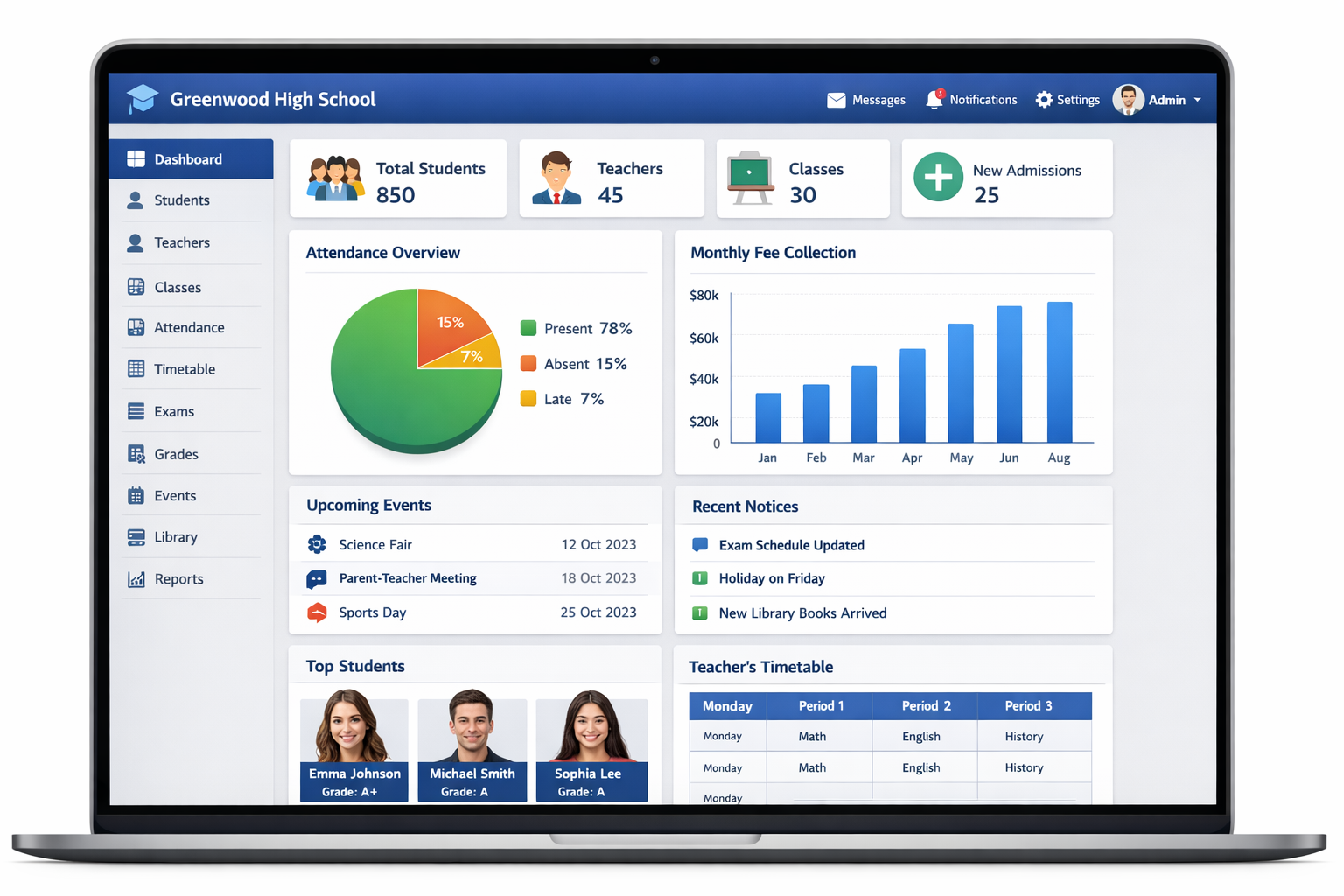
All-in-One School Management Software for Modern Education
Education today is no longer limited to classrooms, registers, and notice boards. Schools are expected to operate with the same efficiency and transparency as modern organizations. This shift has made school management software an essential tool rather than an optional upgrade. By bringing academics, administration, communication, and data management under one digital platform, schools can focus more on learning and less on paperwork.
An all-in-one solution is designed to connect every stakeholder—students, teachers, administrators, and parents—through a single, well-structured system. As education evolves, digital platforms like Schoollog are helping institutions adapt without disrupting their core teaching values.
Why Schools Are Moving Toward Integrated Digital Systems
For decades, schools relied on manual processes or disconnected software tools. Attendance registers, fee records, exam reports, and parent communication were often handled separately. This approach not only consumed time but also increased the chances of errors and miscommunication.
Modern school management software addresses these challenges by offering a centralized system where data flows seamlessly between departments. When attendance data updates automatically, it reflects in reports, dashboards, and parent notifications without repeated manual entry. This integration improves accuracy and saves valuable administrative hours.
Educational technology studies published by organizations such as UNESCO and OECD have consistently highlighted that digital administration improves institutional efficiency and decision-making when implemented thoughtfully.
Core Features of an All-in-One School Management Software
Student Information Management
A centralized student database stores academic history, personal details, attendance records, and performance reports. This ensures that information is accessible, secure, and easy to update when required.
Attendance and Timetable Automation
Automated attendance tracking reduces daily workload for teachers while providing real-time visibility to school administrators. Timetable management tools help avoid scheduling conflicts and ensure optimal resource utilization.
Examination and Report Card Management
From exam scheduling to result generation, digital systems simplify the entire assessment process. Teachers can upload marks securely, and report cards can be generated instantly with consistent formatting.
Fee and Finance Management
Integrated fee modules track payments, generate receipts, and send reminders. This transparency helps schools maintain accurate financial records while giving parents clear visibility into dues and transactions.
Enhancing Communication Between Schools and Parents
Real-Time Notifications
Effective communication builds trust. School management platforms allow schools to send instant notifications about attendance, exams, events, or emergencies through mobile apps, SMS, or email.
Parent Portals
Dedicated parent dashboards provide access to attendance, academic progress, fee status, and school announcements. This involvement helps parents stay informed and engaged in their child’s education journey.
Research from education policy groups shows that increased parental involvement is closely linked to improved student performance and behavior, making communication tools a vital component of modern school systems.
The Role of Analytics in Better Decision-Making
Performance Tracking
Advanced analytics help schools identify academic trends, attendance patterns, and areas where students may need additional support. These insights enable timely interventions rather than reactive measures.
Administrative Insights
Dashboards provide administrators with a clear overview of operations, helping them allocate resources efficiently and plan for future growth.
Schoollog: A Practical Approach to School Digitization
Among the many solutions available today, Schoollog stands out for its balanced focus on usability and functionality. Designed to support schools of different sizes, it offers a structured yet flexible platform that aligns with everyday academic workflows.
Schoollog emphasizes ease of adoption, ensuring that teachers and staff can transition smoothly without extensive technical training. Its modular design allows schools to use only the features they need while retaining the option to scale as requirements evolve. This practical approach makes it suitable for institutions looking for long-term digital stability rather than short-term fixes.
Data Security and Compliance in Educational Software
Secure Data Handling
Student and staff data require strict protection. Reputable school management software uses encrypted storage, role-based access, and secure backups to safeguard sensitive information.
Compliance with Education Standards
Modern platforms are designed to align with regional education guidelines and data protection norms. This ensures schools remain compliant while embracing digital tools responsibly.
Cybersecurity experts often emphasize that centralized systems, when properly maintained, are more secure than scattered manual records or unregulated software tools.
Choosing the Right School Management Software
Selecting the right platform requires more than comparing feature lists. Schools should consider:
- Ease of use for teachers and staff
- Scalability for future growth
- Reliable customer support
- Proven track record and credibility
- Transparent pricing without hidden costs
A well-chosen system becomes a long-term partner in the institution’s growth rather than a recurring operational challenge.
The Future of Digital School Management
As education continues to evolve, school management software will play a larger role in shaping efficient, inclusive, and data-driven institutions. Artificial intelligence, predictive analytics, and mobile-first design are gradually enhancing how schools operate, but the core objective remains the same—supporting better learning outcomes.
All-in-one platforms like Schoolog demonstrate that technology, when implemented thoughtfully, can strengthen education systems without replacing the human connection that defines learning.
Conclusion
All-in-one school management software is no longer a luxury for modern schools; it is a practical necessity. By integrating academics, administration, communication, and analytics into a single platform, schools can operate more efficiently while delivering a better experience for students, teachers, and parents.
With careful selection and responsible implementation, digital solutions can empower educational institutions to meet today’s expectations while preparing confidently for tomorrow’s challenges.